Multi-Symbol Strategies
Purpose and Scope
This document describes patterns for running trading strategies across multiple symbols (trading pairs) simultaneously. The framework is designed to support multi-symbol execution with automatic state isolation per symbol, shared strategy logic, and efficient memory usage through instance memoization.
For information about strategy implementation, see Strategy Configuration. For crash-safe persistence mechanics, see Signal Persistence. For report generation from multi-symbol execution, see Markdown Report Generation.
Architecture for Multi-Symbol Execution
The framework's architecture naturally supports multi-symbol strategies through several key design patterns:
- Symbol-based state isolation - Each
(strategyName, symbol)pair maintains separate signal state - Shared strategy instances - The same
ClientStrategyinstance serves multiple symbols via memoization - Context propagation -
ExecutionContextServiceinjects the current symbol into each operation - Per-symbol persistence - Signal files are stored separately for each symbol

Parallel Execution Pattern
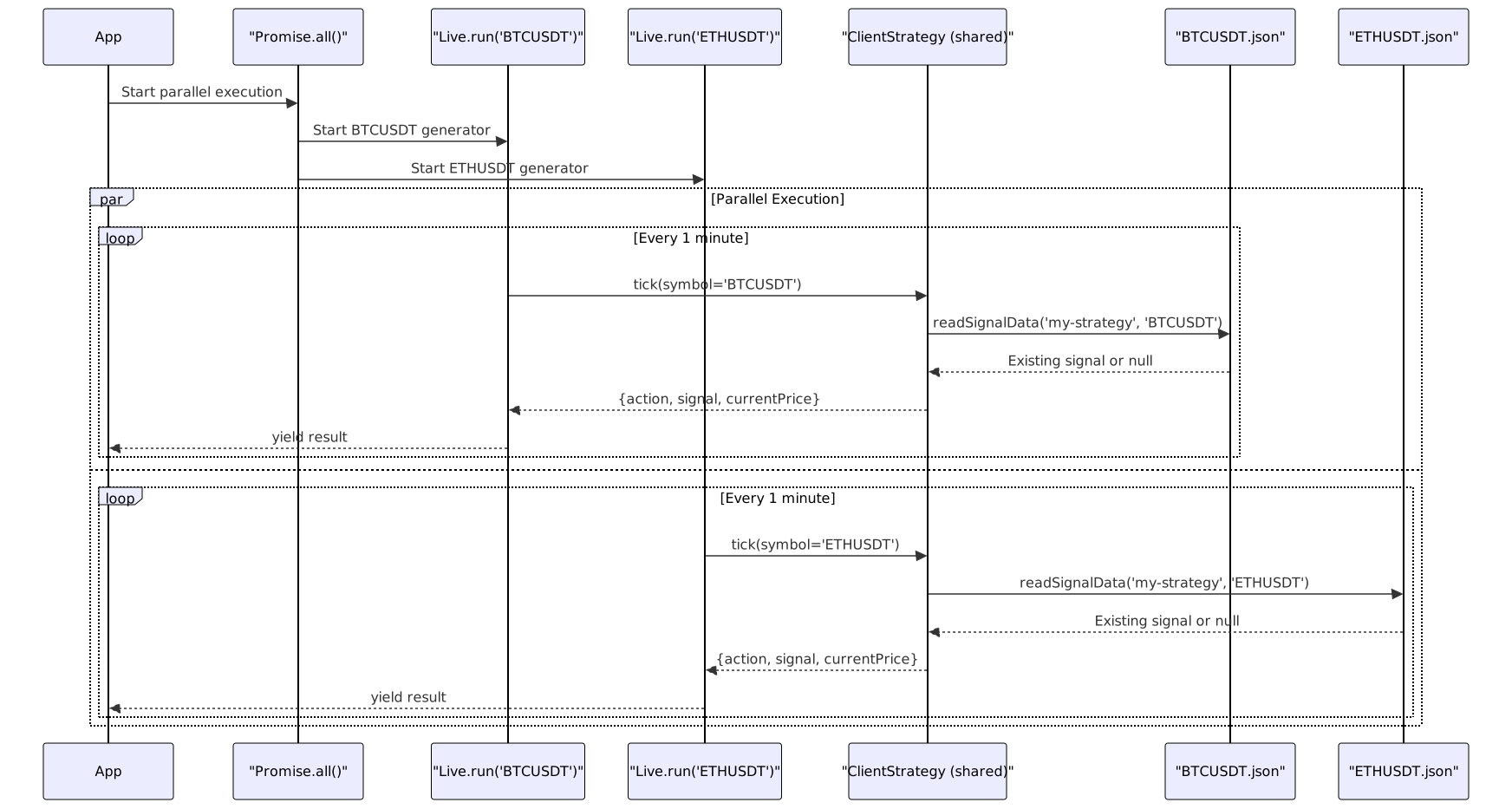
The most common pattern for multi-symbol strategies is parallel execution using Promise.all(). Each symbol runs in its own async generator, yielding results independently.
Basic Parallel Live Trading
import { Live } from "backtest-kit";
const symbols = ["BTCUSDT", "ETHUSDT", "SOLUSDT"];
await Promise.all(
symbols.map(async (symbol) => {
for await (const result of Live.run(symbol, {
strategyName: "my-strategy",
exchangeName: "binance"
})) {
console.log(`[${symbol}] ${result.action}`);
if (result.action === "closed") {
console.log(`[${symbol}] PNL: ${result.pnl.pnlPercentage}%`);
}
}
})
);
Execution Flow Diagram
State Isolation by Symbol
Each (strategyName, symbol) pair maintains completely isolated signal state. This is enforced at the persistence layer, where signal files are stored per symbol.
Persistence File Structure
./signals/
my-strategy/
BTCUSDT.json <- {signalRow: ISignalRow | null}
ETHUSDT.json <- {signalRow: ISignalRow | null}
SOLUSDT.json <- {signalRow: ISignalRow | null}
Signal Isolation Implementation
| Component | Isolation Mechanism |
|---|---|
PersistSignalUtils.readSignalData() |
Takes (strategyName, symbol) as parameters |
PersistSignalUtils.writeSignalData() |
Writes to ./signals/{strategyName}/{symbol}.json |
ClientStrategy._getFilename() |
Computes filename from executionContext.symbol |
ExecutionContextService.context |
Provides symbol for current operation |
State Isolation Flow

Instance Sharing vs State Isolation
The framework achieves memory efficiency by sharing ClientStrategy instances across symbols while maintaining isolated state through the ExecutionContextService.
Memoization Strategy
| Service | Memoization Key | Instances Created |
|---|---|---|
StrategyConnectionService.getStrategy() |
strategyName |
1 per strategy |
ExchangeConnectionService.getExchange() |
exchangeName |
1 per exchange |
FrameConnectionService.getFrame() |
frameName |
1 per frame |
| Signal state persistence | (strategyName, symbol) |
1 file per symbol |
Memory Efficiency Analysis

Memory Usage:
- Without memoization: 3 symbols × 1 strategy = 3
ClientStrategyinstances - With memoization: 3 symbols × 1 strategy = 1
ClientStrategyinstance (shared) - State files: Always 3 (one per symbol), regardless of memoization
Background Execution with Event Listeners
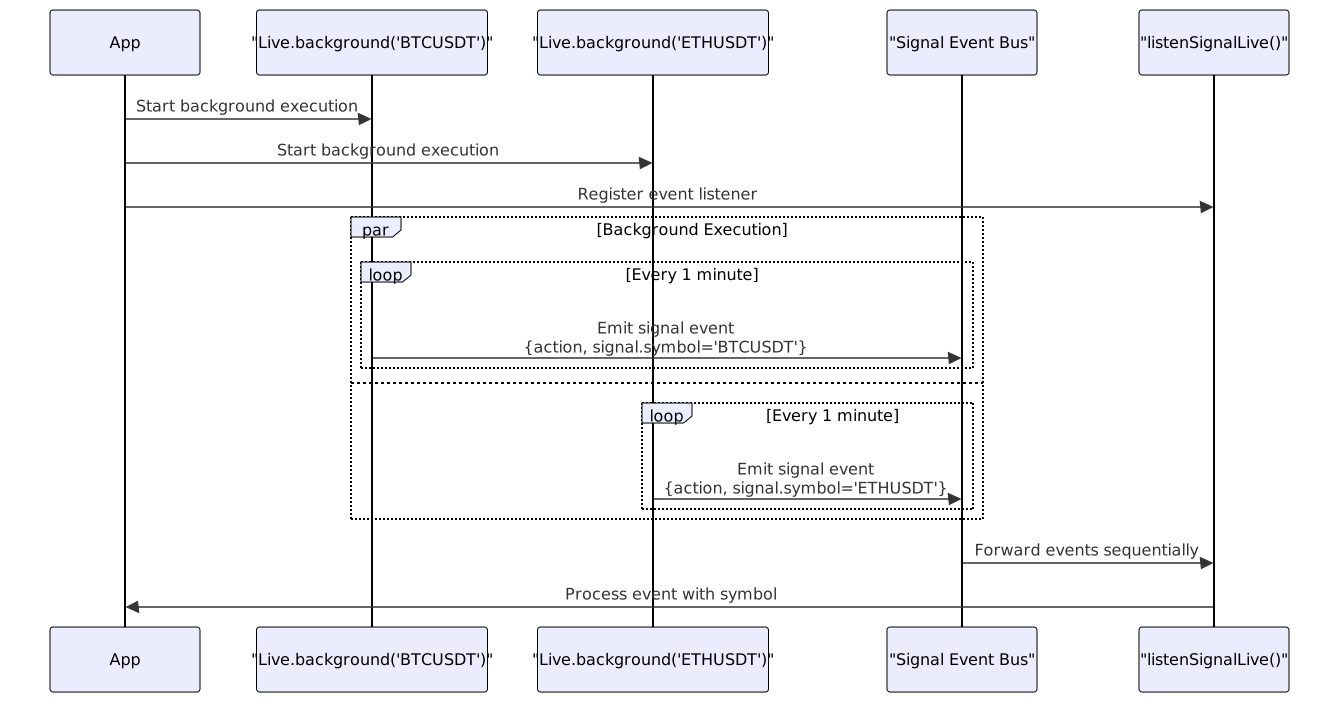
For multi-symbol strategies, background execution with event listeners provides cleaner separation of concerns. Each symbol runs independently while a central listener handles events.
Pattern: Background + Listener
import { Live, listenSignalLive } from "backtest-kit";
const symbols = ["BTCUSDT", "ETHUSDT", "SOLUSDT"];
// Start all symbols in background
const cancellations = await Promise.all(
symbols.map((symbol) =>
Live.background(symbol, {
strategyName: "my-strategy",
exchangeName: "binance"
})
)
);
// Single listener for all symbols
listenSignalLive((event) => {
const symbol = event.signal?.symbol || "UNKNOWN";
if (event.action === "opened") {
console.log(`[${symbol}] Signal opened:`, event.signal.id);
}
if (event.action === "closed") {
console.log(`[${symbol}] Signal closed:`, {
pnl: event.pnl.pnlPercentage,
reason: event.closeReason
});
}
});
// Cancel all on exit
process.on("SIGINT", () => {
cancellations.forEach(cancel => cancel());
process.exit(0);
});
Event Listener Flow
Report Aggregation
When running multiple symbols, the markdown report service aggregates all events for a given strategyName, regardless of symbol. Reports include symbol information in each row.
Report Structure for Multi-Symbol
# Live Trading Report: my-strategy
Total events: 45 (15 per symbol × 3 symbols)
Closed signals: 9 (3 per symbol × 3 symbols)
Win rate: 66.67% (6W / 3L)
Average PNL: +1.45%
| Timestamp | Symbol | Action | Signal ID | Position | ... | PNL (net) | Close Reason |
|-----------|----------|--------|-----------|----------|-----|-----------|--------------|
| 12:00:00 | BTCUSDT | CLOSED | abc-123 | LONG | ... | +2.10% | take_profit |
| 12:01:00 | ETHUSDT | CLOSED | def-456 | SHORT | ... | +1.50% | take_profit |
| 12:02:00 | SOLUSDT | CLOSED | ghi-789 | LONG | ... | -0.80% | stop_loss |
Report Accumulation Pattern

Symbol Filtering in Reports
Since reports aggregate all symbols, you can filter by symbol using event listeners:
import { listenSignalLive } from "backtest-kit";
const btcResults = [];
listenSignalLive((event) => {
if (event.signal?.symbol === "BTCUSDT" && event.action === "closed") {
btcResults.push(event);
}
});
// Later: generate custom report for BTCUSDT only
const btcWinRate = btcResults.filter(r => r.pnl.pnlPercentage > 0).length / btcResults.length;
console.log(`BTCUSDT Win Rate: ${(btcWinRate * 100).toFixed(2)}%`);
Sequential Execution Pattern
While parallel execution is most common, sequential execution can be useful for controlled resource usage or debugging.
Sequential Live Trading
import { Live } from "backtest-kit";
const symbols = ["BTCUSDT", "ETHUSDT", "SOLUSDT"];
// Process one symbol at a time
for (const symbol of symbols) {
console.log(`Starting ${symbol}...`);
let signalCount = 0;
for await (const result of Live.run(symbol, {
strategyName: "my-strategy",
exchangeName: "binance"
})) {
if (result.action === "closed") {
signalCount++;
console.log(`[${symbol}] Signal ${signalCount} closed`);
// Move to next symbol after N signals
if (signalCount >= 10) {
console.log(`${symbol} completed 10 signals, moving to next`);
break;
}
}
}
}
console.log("All symbols processed sequentially");
Sequential vs Parallel Comparison
| Pattern | Memory Usage | Execution Time | Use Case |
|---|---|---|---|
Parallel (Promise.all) |
Higher (all generators active) | Faster (concurrent) | Production multi-symbol trading |
| Sequential (for loop) | Lower (one generator active) | Slower (serial) | Debugging, resource-constrained environments |
Background (.background()) |
Medium (generators in background) | Fast (fire-and-forget) | Event-driven architectures |
Cross-Symbol Coordination
For advanced strategies that need to coordinate decisions across symbols, use shared state outside the framework.
Pattern: Shared State Coordination
import { Live, listenSignalLive } from "backtest-kit";
// Shared state for cross-symbol coordination
const portfolio = {
totalPnL: 0,
activeSignals: new Set<string>(),
maxConcurrentSignals: 3,
};
// Listen to all signals and update shared state
listenSignalLive((event) => {
const symbol = event.signal?.symbol;
if (event.action === "opened") {
portfolio.activeSignals.add(event.signal.id);
console.log(`Active signals: ${portfolio.activeSignals.size}`);
}
if (event.action === "closed") {
portfolio.activeSignals.delete(event.signal.id);
portfolio.totalPnL += event.pnl.pnlPercentage;
console.log(`Portfolio PnL: ${portfolio.totalPnL.toFixed(2)}%`);
// Risk management: stop all if portfolio loss > 10%
if (portfolio.totalPnL < -10) {
console.error("Portfolio loss limit exceeded, stopping all symbols");
process.exit(1);
}
}
});
// Run all symbols
const symbols = ["BTCUSDT", "ETHUSDT", "SOLUSDT"];
await Promise.all(
symbols.map((symbol) =>
Live.background(symbol, {
strategyName: "my-strategy",
exchangeName: "binance"
})
)
);
Cross-Symbol Strategy Implementation
For strategies that need symbol data in getSignal(), use the ExecutionContextService:
import { addStrategy, getCandles } from "backtest-kit";
// Global state for cross-symbol analysis
const symbolData = new Map<string, { lastPrice: number }>();
addStrategy({
strategyName: "correlation-strategy",
interval: "5m",
getSignal: async (symbol) => {
// Get current symbol data
const candles = await getCandles(symbol, "1m", 1);
const currentPrice = candles[0].close;
// Update shared state
symbolData.set(symbol, { lastPrice: currentPrice });
// Decision based on other symbols
if (symbol === "BTCUSDT" && symbolData.has("ETHUSDT")) {
const ethPrice = symbolData.get("ETHUSDT").lastPrice;
const btcPrice = currentPrice;
const ratio = btcPrice / ethPrice;
// Trade BTC if ratio is unusual
if (ratio > 20) {
return {
position: "long",
priceOpen: currentPrice,
priceTakeProfit: currentPrice * 1.02,
priceStopLoss: currentPrice * 0.98,
minuteEstimatedTime: 60,
};
}
}
return null; // No signal
},
});
Error Recovery and Resilience
When one symbol encounters an error, the framework's design ensures other symbols continue operating independently.
Error Isolation Pattern
import { Live } from "backtest-kit";
const symbols = ["BTCUSDT", "ETHUSDT", "SOLUSDT"];
// Wrap each symbol in error boundary
await Promise.all(
symbols.map(async (symbol) => {
try {
for await (const result of Live.run(symbol, {
strategyName: "my-strategy",
exchangeName: "binance"
})) {
console.log(`[${symbol}]`, result.action);
}
} catch (error) {
console.error(`[${symbol}] ERROR:`, error.message);
// Log error but don't crash other symbols
await Live.dump("my-strategy", `./errors/${symbol}`);
// Optionally restart this symbol after delay
await new Promise(resolve => setTimeout(resolve, 5000));
// Recursively restart
}
})
);
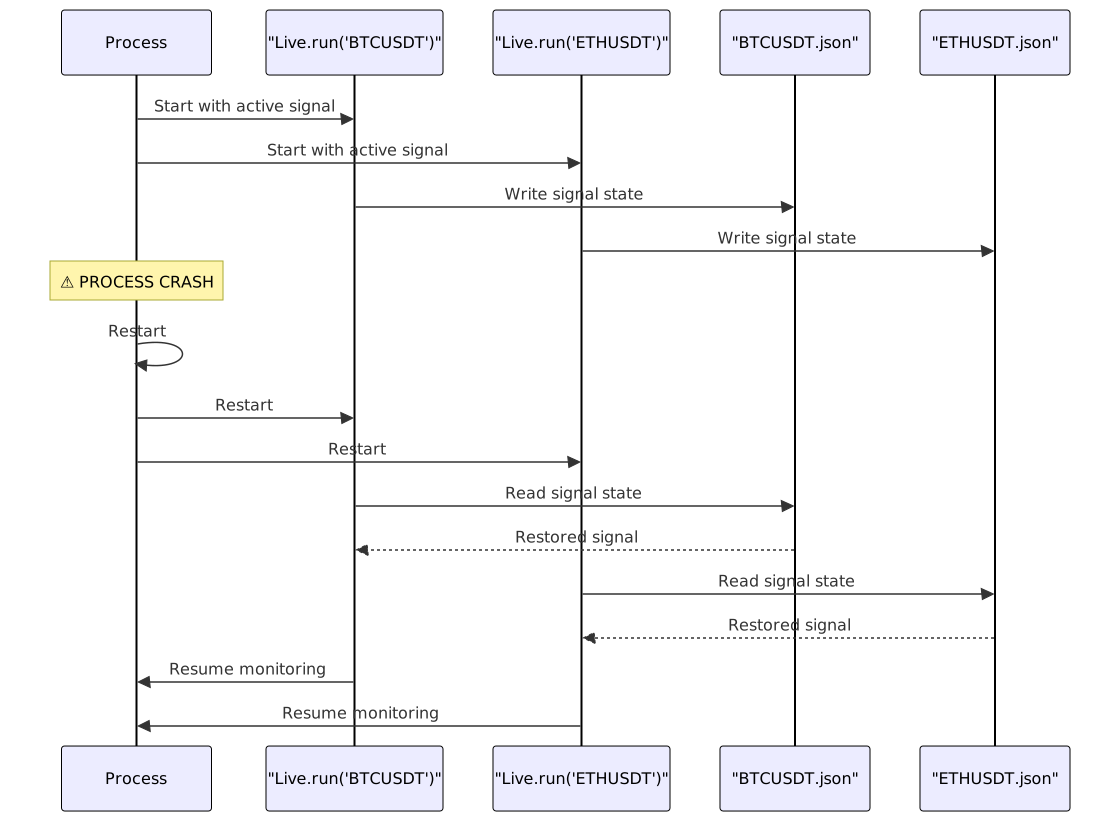
Crash Recovery Per Symbol
Each symbol's state is persisted independently. If the entire process crashes:
- BTCUSDT signal state:
./signals/my-strategy/BTCUSDT.json(restored) - ETHUSDT signal state:
./signals/my-strategy/ETHUSDT.json(restored) - SOLUSDT signal state:
./signals/my-strategy/SOLUSDT.json(restored)
On restart, all symbols resume from their last persisted state with no signal duplication.
Selective Symbol Processing
For strategies that need to dynamically enable/disable symbols based on conditions:
Pattern: Conditional Symbol Execution
import { Live, listenSignalLive } from "backtest-kit";
const allSymbols = ["BTCUSDT", "ETHUSDT", "SOLUSDT", "BNBUSDT", "ADAUSDT"];
const activeSymbols = new Set(allSymbols.slice(0, 3)); // Start with first 3
// Track performance per symbol
const symbolStats = new Map(
allSymbols.map(s => [s, { wins: 0, losses: 0 }])
);
listenSignalLive((event) => {
if (event.action === "closed") {
const symbol = event.signal.symbol;
const stats = symbolStats.get(symbol);
if (event.pnl.pnlPercentage > 0) {
stats.wins++;
} else {
stats.losses++;
}
// Disable symbol if win rate < 40%
const total = stats.wins + stats.losses;
if (total >= 10) {
const winRate = stats.wins / total;
if (winRate < 0.4 && activeSymbols.has(symbol)) {
console.log(`Disabling ${symbol} due to low win rate: ${winRate}`);
activeSymbols.delete(symbol);
// Note: generator will continue until manually stopped
}
}
}
});
// Start all symbols
const cancellations = new Map();
for (const symbol of allSymbols) {
const cancel = await Live.background(symbol, {
strategyName: "my-strategy",
exchangeName: "binance"
});
cancellations.set(symbol, cancel);
}
// Monitor and disable underperforming symbols
setInterval(() => {
for (const [symbol, cancel] of cancellations.entries()) {
if (!activeSymbols.has(symbol)) {
cancel(); // Stop this symbol's execution
cancellations.delete(symbol);
console.log(`Stopped ${symbol}`);
}
}
}, 60000); // Check every minute
Backtesting Multiple Symbols
For backtesting across multiple symbols, the same parallel execution pattern applies:
Parallel Backtest Execution
import { Backtest } from "backtest-kit";
const symbols = ["BTCUSDT", "ETHUSDT", "SOLUSDT"];
// Backtest all symbols in parallel
const results = await Promise.all(
symbols.map(async (symbol) => {
const symbolResults = [];
for await (const result of Backtest.run(symbol, {
strategyName: "my-strategy",
exchangeName: "binance",
frameName: "1d-backtest"
})) {
symbolResults.push({
symbol,
pnl: result.pnl.pnlPercentage,
reason: result.closeReason,
});
}
return { symbol, results: symbolResults };
})
);
// Aggregate results
results.forEach(({ symbol, results: symbolResults }) => {
const totalPnl = symbolResults.reduce((sum, r) => sum + r.pnl, 0);
const avgPnl = totalPnl / symbolResults.length;
console.log(`${symbol}: ${symbolResults.length} signals, avg PNL: ${avgPnl.toFixed(2)}%`);
});
// Generate combined report
await Backtest.dump("my-strategy");
Backtest Performance Comparison
| Symbol | Signals | Win Rate | Avg PNL | Best PNL | Worst PNL |
|---|---|---|---|---|---|
| BTCUSDT | 45 | 62.2% | +1.23% | +5.10% | -2.30% |
| ETHUSDT | 52 | 57.7% | +0.89% | +4.20% | -1.80% |
| SOLUSDT | 38 | 68.4% | +1.67% | +6.50% | -1.50% |
Best Practices
1. Resource Management
// Good: Limit concurrent symbols to avoid memory pressure
const MAX_CONCURRENT = 5;
const symbols = ["BTC", "ETH", "SOL", "BNB", "ADA", "DOT", "LINK", "MATIC"];
for (let i = 0; i < symbols.length; i += MAX_CONCURRENT) {
const batch = symbols.slice(i, i + MAX_CONCURRENT);
await Promise.all(batch.map(s => processSymbol(s)));
}
// Bad: Running 100 symbols in parallel without limits
await Promise.all(allSymbols.map(s => processSymbol(s)));
2. Error Boundaries
// Good: Wrap each symbol in try-catch
await Promise.all(
symbols.map(async (symbol) => {
try {
await processSymbol(symbol);
} catch (error) {
logger.error(`${symbol} failed:`, error);
// Continue with other symbols
}
})
);
// Bad: Single try-catch around all symbols
try {
await Promise.all(symbols.map(s => processSymbol(s)));
} catch (error) {
// One error crashes all symbols
}
3. Graceful Shutdown
// Good: Clean shutdown with cancellation
const cancellations = await Promise.all(
symbols.map(s => Live.background(s, context))
);
process.on("SIGINT", async () => {
console.log("Shutting down...");
cancellations.forEach(cancel => cancel());
await Live.dump("my-strategy"); // Save final report
process.exit(0);
});
// Bad: Abrupt exit without cleanup
process.on("SIGINT", () => process.exit(0));
4. Symbol-Specific Configuration
// Good: Different strategies per symbol type
const btcConfig = { strategyName: "btc-strategy", exchangeName: "binance" };
const altConfig = { strategyName: "alt-strategy", exchangeName: "binance" };
await Promise.all([
Live.background("BTCUSDT", btcConfig),
Live.background("ETHUSDT", altConfig),
Live.background("SOLUSDT", altConfig),
]);
// Bad: Forcing same strategy on all symbols
await Promise.all(
symbols.map(s => Live.background(s, { strategyName: "one-size-fits-all", ... }))
);