Custom Persistence Backends
This page explains how to implement custom persistence backends for signal state storage. By default, the framework uses file-based atomic persistence for crash-safe live trading. Custom backends enable integration with Redis, PostgreSQL, MongoDB, or any other storage system while maintaining crash recovery guarantees.
For general information about signal persistence and crash recovery mechanisms, see Signal Persistence. For implementing custom data sources for candle data, see Custom Exchange Integration.
Persistence Architecture Overview
The persistence layer uses a factory pattern with pluggable backends. The PersistSignalUtils class manages storage instances per strategy, while PersistBase provides the default file-based implementation.
Architecture Diagram: Persistence Layer Components

The IPersistBase Interface
Custom persistence backends must implement the IPersistBase<Entity> interface, which defines core operations for CRUD functionality.
Interface Contract
| Method | Signature | Purpose |
|---|---|---|
waitForInit |
(initial: boolean) => Promise<void> |
Initialize storage, validate existing data |
readValue |
(entityId: EntityId) => Promise<Entity> |
Read entity by ID, throw if not found |
hasValue |
(entityId: EntityId) => Promise<boolean> |
Check entity existence |
writeValue |
(entityId: EntityId, entity: Entity) => Promise<void> |
Write entity atomically |
Entity Types for Signal Persistence
// Entity identifier - string or number
type EntityId = string | number;
// Base interface for persisted entities
interface IEntity {}
// Signal data stored in persistence layer
type SignalData = ISignalRow | null;
// Constructor signature for custom adapters
type TPersistBaseCtor<EntityName, Entity> =
new (entityName: EntityName, baseDir: string) => IPersistBase<Entity>;
Default File-Based Implementation
The PersistBase class provides the default implementation using atomic file writes to prevent corruption during crashes.
Default Implementation Flow
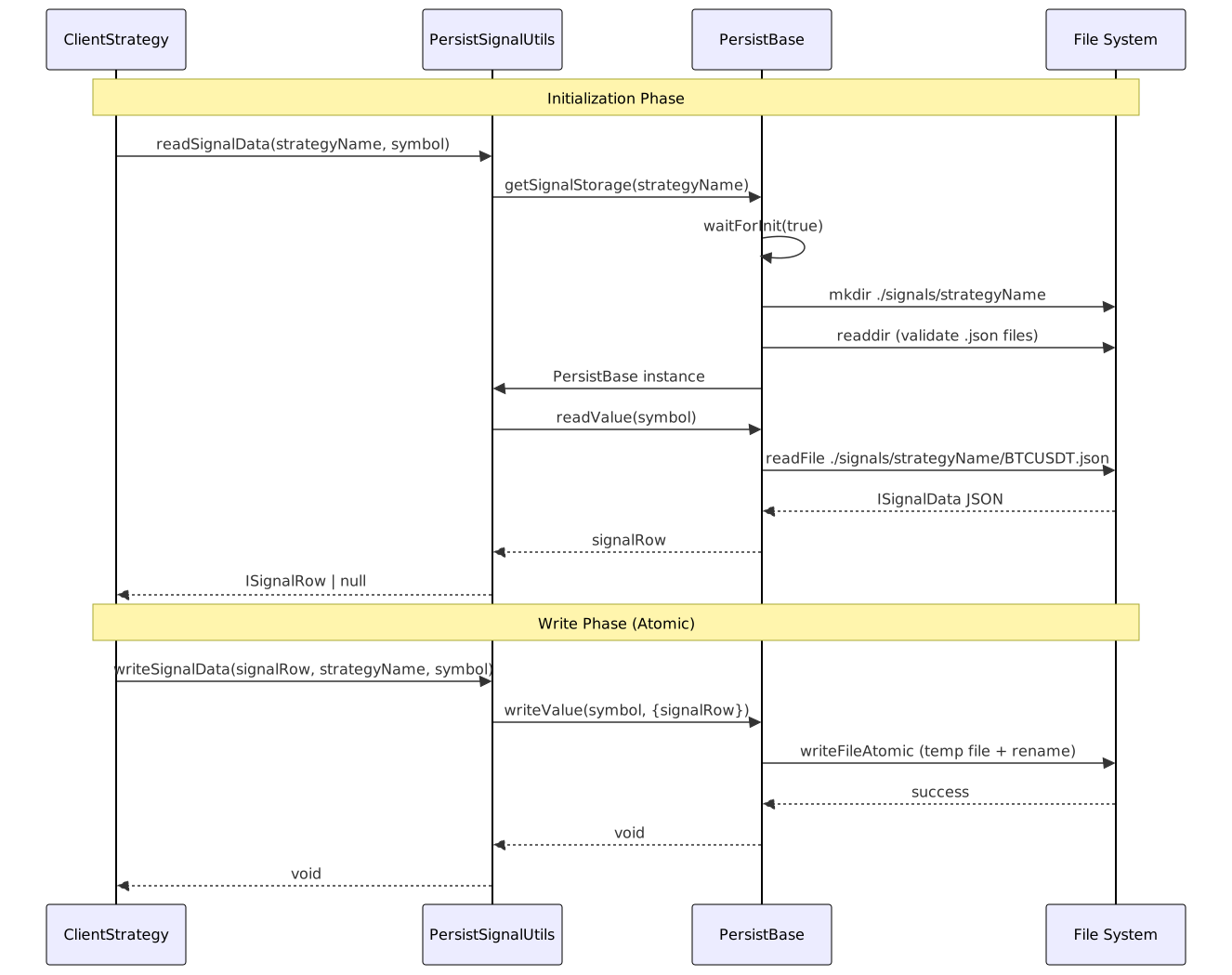
Key Features of PersistBase
- Atomic Writes: Uses
writeFileAtomicto write to temporary file then rename, preventing partial writes during crashes - Auto-Validation: On
waitForInit(), validates existing JSON files and removes corrupted ones - Directory Structure:
./logs/data/{entityName}/{entityId}.jsonfor each entity - Async Generators: Provides
values(),keys(),filter(),take()for iteration - Singleshot Initialization:
waitForInit()uses memoization to run only once per instance - Retry Logic: File deletion operations retry up to 5 times with 1 second delay between attempts
Implementing Custom Persistence Adapters
Custom adapters extend or implement the IPersistBase<ISignalData> interface. The constructor must accept entityName (strategy name) and baseDir (configuration directory).
Implementation Requirements Diagram

Example: Redis Persistence Adapter
The README provides a complete Redis adapter implementation that can be used as a reference.
import { PersistBase } from "backtest-kit";
import Redis from "ioredis";
const redis = new Redis();
class RedisPersist extends PersistBase {
// Initialize Redis connection
async waitForInit(initial: boolean): Promise<void> {
console.log(`Redis persistence initialized for ${this.entityName}`);
}
// Read entity from Redis
async readValue<T>(entityId: string | number): Promise<T> {
const key = `${this.entityName}:${entityId}`;
const data = await redis.get(key);
if (!data) {
throw new Error(`Entity ${this.entityName}:${entityId} not found`);
}
return JSON.parse(data) as T;
}
// Check if entity exists in Redis
async hasValue(entityId: string | number): Promise<boolean> {
const key = `${this.entityName}:${entityId}`;
const exists = await redis.exists(key);
return exists === 1;
}
// Write entity to Redis
async writeValue<T>(entityId: string | number, entity: T): Promise<void> {
const key = `${this.entityName}:${entityId}`;
const serializedData = JSON.stringify(entity);
await redis.set(key, serializedData);
// Optional: Set TTL (time to live)
// await redis.expire(key, 86400); // 24 hours
}
// Remove entity from Redis
async removeValue(entityId: string | number): Promise<void> {
const key = `${this.entityName}:${entityId}`;
const result = await redis.del(key);
if (result === 0) {
throw new Error(`Entity ${this.entityName}:${entityId} not found for deletion`);
}
}
// Remove all entities for this entity type
async removeAll(): Promise<void> {
const pattern = `${this.entityName}:*`;
const keys = await redis.keys(pattern);
if (keys.length > 0) {
await redis.del(...keys);
}
}
// Iterate over all entity values
async *values<T>(): AsyncGenerator<T> {
const pattern = `${this.entityName}:*`;
const keys = await redis.keys(pattern);
// Sort keys alphanumerically
keys.sort((a, b) => a.localeCompare(b, undefined, {
numeric: true,
sensitivity: "base"
}));
for (const key of keys) {
const data = await redis.get(key);
if (data) {
yield JSON.parse(data) as T;
}
}
}
// Iterate over all entity IDs
async *keys(): AsyncGenerator<string> {
const pattern = `${this.entityName}:*`;
const keys = await redis.keys(pattern);
// Sort keys alphanumerically
keys.sort((a, b) => a.localeCompare(b, undefined, {
numeric: true,
sensitivity: "base"
}));
for (const key of keys) {
// Extract entity ID from key (remove prefix)
const entityId = key.slice(this.entityName.length + 1);
yield entityId;
}
}
}
Registration and Lifecycle
Custom adapters are registered globally via PersistSignalAdaper.usePersistSignalAdapter(). This must be called before any backtest or live trading execution.
Registration Flow
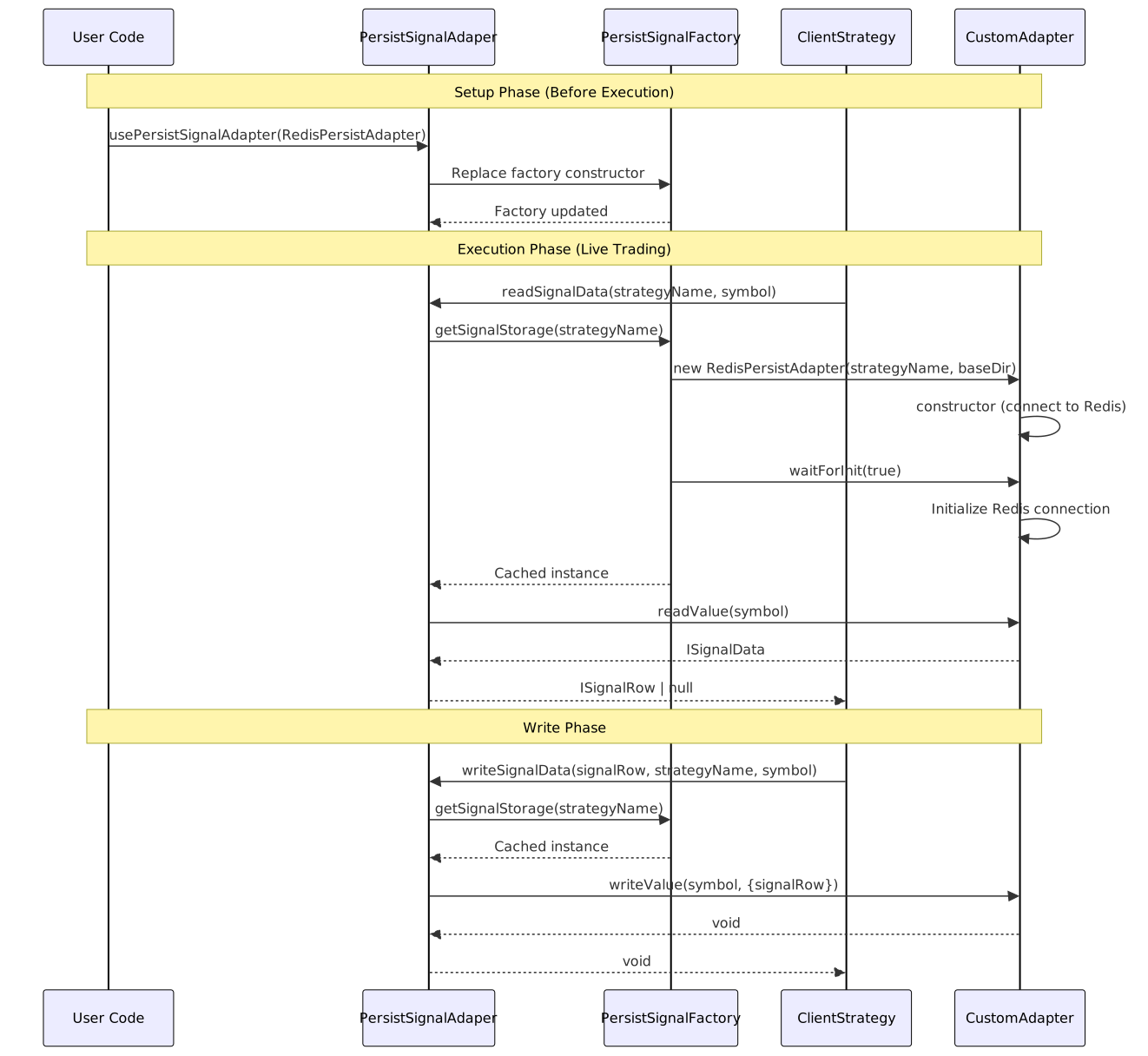
Registration Code Example
import { PersistSignalAdaper, PersistRiskAdapter, Live } from 'backtest-kit';
import { RedisPersist } from './adapters/RedisPersist';
// IMPORTANT: Register adapters BEFORE running any strategies
PersistSignalAdaper.usePersistSignalAdapter(RedisPersist);
PersistRiskAdapter.usePersistRiskAdapter(RedisPersist);
// Now run live trading with Redis persistence
Live.background("BTCUSDT", {
strategyName: "my-strategy",
exchangeName: "binance"
});
Integration Patterns
Different storage backends have different characteristics. Choose based on your operational requirements.
Storage Backend Comparison
| Backend | Atomicity | Durability | Performance | Use Case |
|---|---|---|---|---|
| File System (default) | ✅ Atomic rename | ✅ fsync | Medium | Single-instance deployments |
| Redis | ✅ MULTI/EXEC | ⚠️ Configurable | Very High | Distributed, high-throughput |
| PostgreSQL | ✅ Transactions | ✅ WAL | Medium | Multi-strategy orchestration |
| MongoDB | ✅ Write concern | ✅ Journal | High | Document-oriented storage |
MongoDB Adapter Pattern
The README provides a complete MongoDB adapter implementation:
import { PersistBase } from "backtest-kit";
import { MongoClient, Collection } from "mongodb";
const client = new MongoClient("mongodb://localhost:27017");
const db = client.db("backtest-kit");
class MongoPersist extends PersistBase {
private collection: Collection;
constructor(entityName: string, baseDir: string) {
super(entityName, baseDir);
this.collection = db.collection(this.entityName);
}
async waitForInit(initial: boolean): Promise<void> {
await client.connect();
// Create index for faster lookups
await this.collection.createIndex({ entityId: 1 }, { unique: true });
console.log(`MongoDB persistence initialized for ${this.entityName}`);
}
async readValue<T>(entityId: string | number): Promise<T> {
const doc = await this.collection.findOne({ entityId });
if (!doc) {
throw new Error(`Entity ${this.entityName}:${entityId} not found`);
}
return doc.data as T;
}
async hasValue(entityId: string | number): Promise<boolean> {
const count = await this.collection.countDocuments({ entityId });
return count > 0;
}
async writeValue<T>(entityId: string | number, entity: T): Promise<void> {
await this.collection.updateOne(
{ entityId },
{ $set: { entityId, data: entity, updatedAt: new Date() } },
{ upsert: true }
);
}
async removeValue(entityId: string | number): Promise<void> {
const result = await this.collection.deleteOne({ entityId });
if (result.deletedCount === 0) {
throw new Error(`Entity ${this.entityName}:${entityId} not found for deletion`);
}
}
async removeAll(): Promise<void> {
await this.collection.deleteMany({});
}
async *values<T>(): AsyncGenerator<T> {
const cursor = this.collection.find({}).sort({ entityId: 1 });
for await (const doc of cursor) {
yield doc.data as T;
}
}
async *keys(): AsyncGenerator<string> {
const cursor = this.collection.find({}, { projection: { entityId: 1 } }).sort({ entityId: 1 });
for await (const doc of cursor) {
yield String(doc.entityId);
}
}
}
Testing Custom Adapters
Custom adapters should be thoroughly tested for atomicity, crash recovery, and concurrent access patterns.
Test Requirements

Example Test Suite
import { test } from "worker-testbed";
import { PersistBase } from "backtest-kit";
test("Custom Redis adapter works correctly", async ({ pass, fail }) => {
const persist = new RedisPersist("test-entity", "./logs/test");
await persist.waitForInit(true);
// Write
await persist.writeValue("key1", { data: "value1" });
// Read
const value = await persist.readValue("key1");
if (value.data === "value1") {
pass("Redis adapter read/write works");
} else {
fail("Redis adapter failed");
}
// Cleanup
await persist.removeValue("key1");
});
Advanced Patterns
Adapter with Caching Layer
Implement in-memory caching to reduce backend calls for frequently accessed signals.
class CachedRedisPersistAdapter implements IPersistBase<ISignalData> {
private cache = new Map<string, ISignalData>();
private redis: Redis;
async readValue(entityId: string | number): Promise<ISignalData> {
const key = String(entityId);
// Check cache first
if (this.cache.has(key)) {
return this.cache.get(key)!;
}
// Fallback to Redis
const data = await this.readFromRedis(entityId);
this.cache.set(key, data);
return data;
}
async writeValue(entityId: string | number, entity: ISignalData): Promise<void> {
const key = String(entityId);
// Write-through: update cache and Redis
this.cache.set(key, entity);
await this.writeToRedis(entityId, entity);
}
}
Multi-Region Replication
Implement replication across multiple regions for disaster recovery.
class ReplicatedPersistAdapter extends PersistBase {
private primaryAdapter: PersistBase;
private replicaAdapters: PersistBase[];
async writeValue<T>(entityId: string | number, entity: T): Promise<void> {
// Write to primary first (blocking)
await this.primaryAdapter.writeValue(entityId, entity);
// Write to replicas asynchronously (non-blocking)
Promise.all(
this.replicaAdapters.map(adapter =>
adapter.writeValue(entityId, entity).catch(err => {
console.error('Replica write failed:', err);
})
)
);
}
async readValue<T>(entityId: string | number): Promise<T> {
// Always read from primary for consistency
return this.primaryAdapter.readValue<T>(entityId);
}
}
Summary
Custom persistence backends enable flexible storage solutions while maintaining crash recovery guarantees. Key implementation requirements:
- Implement
IPersistBase<ISignalData>with four core methods - Constructor signature must accept
(entityName: string, baseDir: string) - Atomic writes are critical for crash safety - use transactions or atomic operations
- Register globally via
PersistSignalAdaper.usePersistSignalAdapter()before execution - Test thoroughly for atomicity, crash recovery, and concurrent access
The memoized factory pattern ensures single instances per strategy, and the nullable signalRow design enables atomic state clearing for proper signal lifecycle management.