ClientStrategy
Purpose and Scope
ClientStrategy implements the IStrategy interface defined in src/interfaces/Strategy.interface.ts:318-388 and serves as the core execution engine for trading signal lifecycle management. The class is instantiated by StrategyConnectionService with memoization per symbol:strategyName:backtest combination.
Core Responsibilities:
- Signal Generation: Calls user-defined
getSignal()function with interval throttling viaGET_SIGNAL_FN - Validation: Enforces 30+ validation rules through
VALIDATE_SIGNAL_FNbefore signal activation - State Management: Maintains
_pendingSignal(active positions) and_scheduledSignal(limit orders) with atomic persistence - Monitoring: Continuously checks VWAP prices against
priceTakeProfit,priceStopLoss, andminuteEstimatedTimeintick()method - Execution Modes: Supports both real-time
tick()iteration (live mode) and fast-forwardbacktest()simulation (backtest mode)
State Machine Implementation:
The class manages six discriminated union states: IStrategyTickResultIdle, IStrategyTickResultScheduled, IStrategyTickResultOpened, IStrategyTickResultActive, IStrategyTickResultClosed, IStrategyTickResultCancelled.
For strategy schema definitions, see Strategy Schemas. For signal state transitions, see Signal Lifecycle. For persistence adapters, see Signal Persistence.
Class Architecture
ClientStrategy is instantiated by StrategyConnectionService with memoization per symbol-strategy pair. The class maintains internal state for pending and scheduled signals while delegating to injected dependencies for exchange data, risk validation, and persistence.

State Variables:
_isStopped: Flag set bystop()to prevent new signal generation_pendingSignal: Currently active signal being monitored for TP/SL_scheduledSignal: Signal waiting for price to reachpriceOpenfor activation_lastSignalTimestamp: Timestamp of lastgetSignal()call for interval throttling
Signal State Machine
The strategy manages signals through a state machine with two parallel tracks: scheduled signals (delayed entry via _scheduledSignal) and pending signals (active positions via _pendingSignal). Each state corresponds to a discriminated union type from src/interfaces/Strategy.interface.ts:174-307.
State-to-Code Mapping

State Variables and Types
| State | Type | Variable | Persistence Adapter | Line Reference |
|---|---|---|---|---|
| Idle | IStrategyTickResultIdle |
_pendingSignal=null _scheduledSignal=null |
- | src/client/ClientStrategy.ts:1516-1519 |
| Scheduled | IStrategyTickResultScheduled |
_scheduledSignal: IScheduledSignalRow |
PersistScheduleAdapter |
src/client/ClientStrategy.ts:1519 |
| Opened | IStrategyTickResultOpened |
_pendingSignal: ISignalRow (just set) |
PersistSignalAdapter |
src/client/ClientStrategy.ts:1516 |
| Active | IStrategyTickResultActive |
_pendingSignal: ISignalRow |
PersistSignalAdapter |
src/client/ClientStrategy.ts:1516 |
| Closed | IStrategyTickResultClosed |
_pendingSignal=null (after cleanup) |
- | src/client/ClientStrategy.ts:1000 |
| Cancelled | IStrategyTickResultCancelled |
_scheduledSignal=null (after cleanup) |
- | src/client/ClientStrategy.ts:578 |
Signal Intervals and Throttling
ClientStrategy enforces minimum time between getSignal() calls using the interval parameter. This prevents excessive signal generation and API rate limiting.
| Interval | Minutes | Milliseconds | Use Case |
|---|---|---|---|
1m |
1 | 60,000 | High-frequency scalping |
3m |
3 | 180,000 | Fast momentum strategies |
5m |
5 | 300,000 | Short-term swing trading |
15m |
15 | 900,000 | Medium-term position trading |
30m |
30 | 1,800,000 | Longer-term strategies |
1h |
60 | 3,600,000 | Daily trading strategies |
Throttling Implementation:

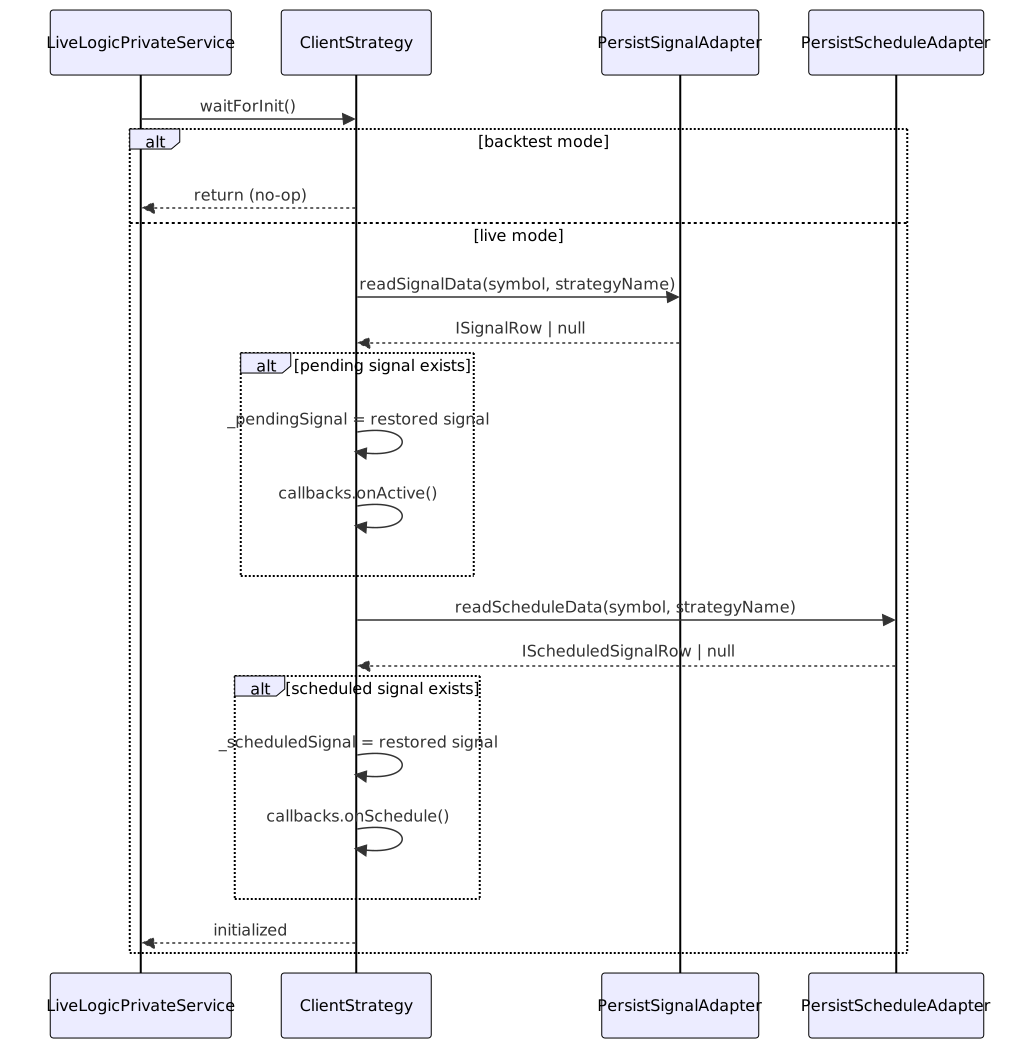
Method: waitForInit()
Initializes strategy state by loading persisted signals from disk (live mode only). Uses singleshot pattern to ensure execution exactly once per instance.
// Usage in LiveLogicPrivateService
const strategy = await strategyConnection.getStrategy(symbol, strategyName);
await strategy.waitForInit();
Behavior:
- Backtest mode: Returns immediately (no persistence)
- Live mode:
- Reads
_pendingSignalfromPersistSignalAdapter - Reads
_scheduledSignalfromPersistScheduleAdapter - Validates exchangeName/strategyName match
- Triggers
onActiveoronSchedulecallbacks for restored signals
- Reads
State Restoration Flow:
Method: tick()
Performs a single iteration of strategy execution, handling signal generation, validation, monitoring, and closure.
Execution Flow (Live Mode)

Key Decision Points:
- Stopped check: Early return if
stop()was called - Scheduled signal monitoring: Check timeout and price activation
- Signal generation: Call
getSignal()with throttling if no active signal - Pending signal monitoring: Check VWAP against TP/SL and time expiration
Method: backtest()
Fast-forwards through historical candle data to simulate signal lifecycle without real-time waiting. Processes entire signal duration in one call.
Backtest Flow

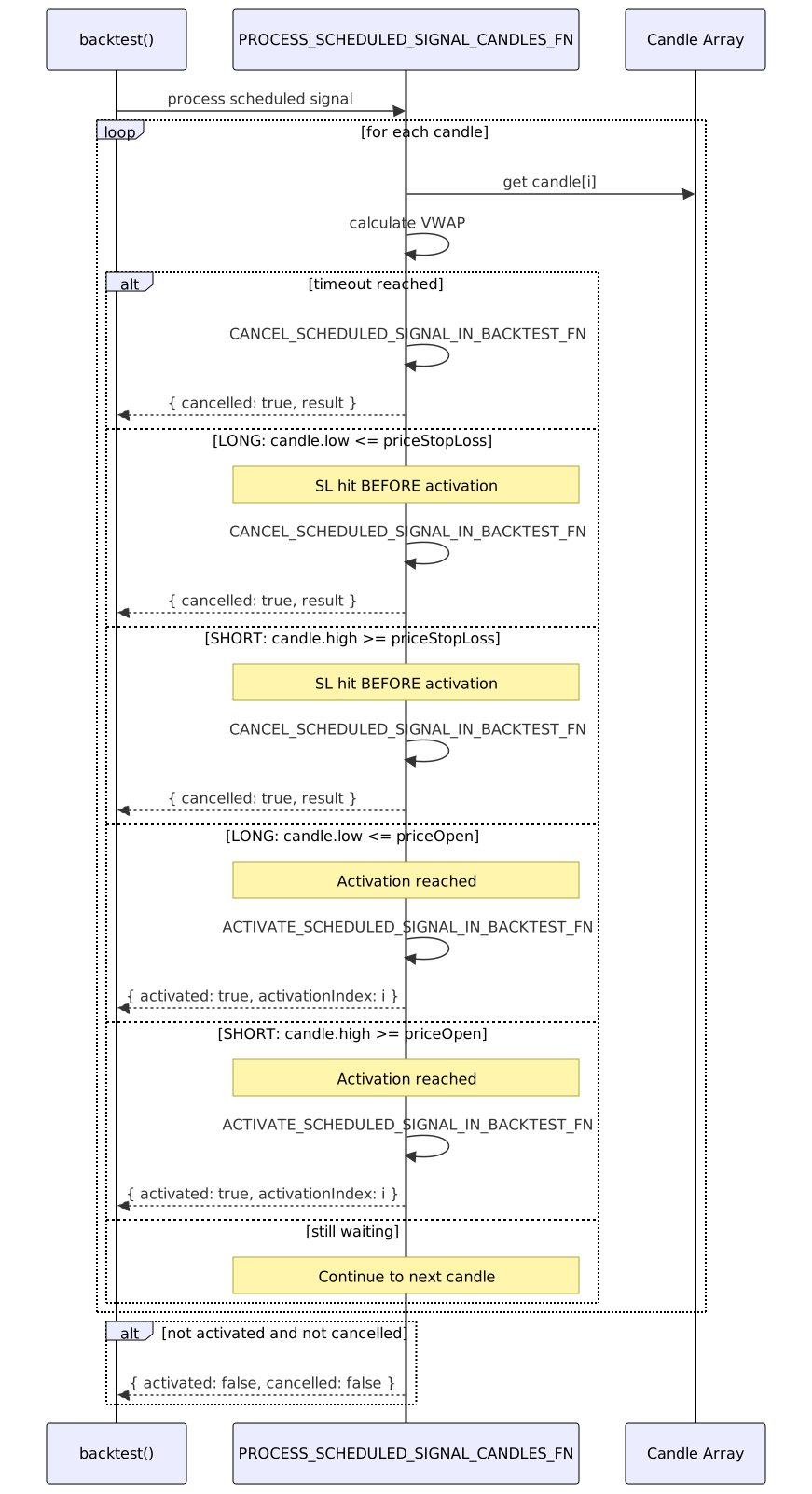
Scheduled Signal Processing Logic:
For scheduled signals, the backtest must first determine if/when activation occurs:
VWAP Calculation Window:
Uses last N candles (default 5) for VWAP calculation, configurable via CC_AVG_PRICE_CANDLES_COUNT:
Candle Index: 0 1 2 3 4 5 6 7
[----][----][----][----][====][====][====][====]
^ ^
| |
Start here Current position
(i=4) Uses candles 3-7
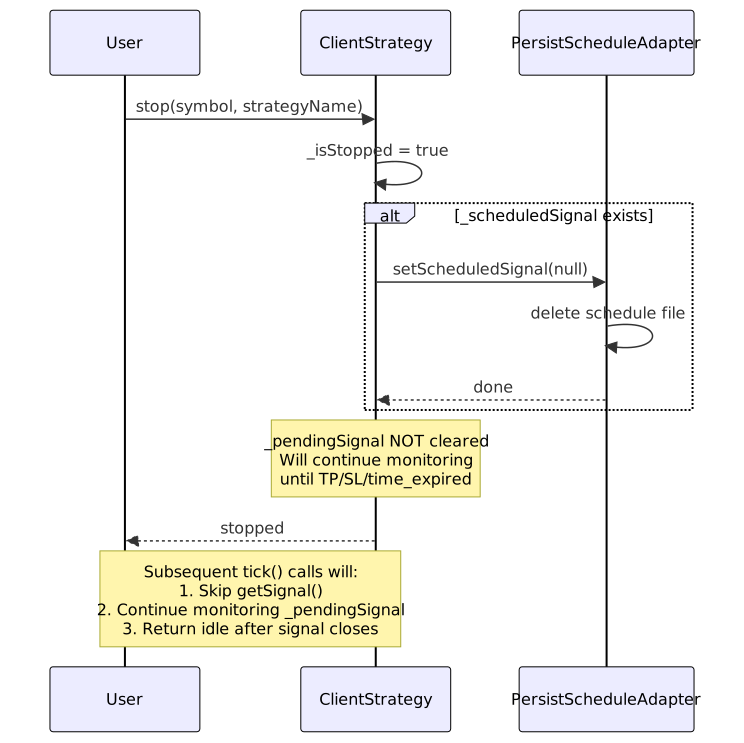
Method: stop()
Gracefully stops new signal generation while allowing active positions to close naturally.
Behavior:
- Sets
_isStopped = trueto preventgetSignal()calls - Clears
_scheduledSignalif exists (not yet activated) - Does NOT force-close
_pendingSignal(continues monitoring)
Signal Generation Pipeline
The GET_SIGNAL_FN helper orchestrates multi-stage validation before creating signals.

Validation Stages:
| Stage | Check | Action |
|---|---|---|
| 1. Stopped | _isStopped === true |
Return null |
| 2. Throttling | currentTime - _lastSignalTimestamp < intervalMs |
Return null |
| 3. Risk Gate | risk.checkSignal() returns false |
Return null |
| 4. Signal Generation | getSignal() returns null |
Return null |
| 5. Signal Validation | VALIDATE_SIGNAL_FN() throws |
Error logged, return null |
Signal Validation Rules
VALIDATE_SIGNAL_FN enforces 30+ validation rules to prevent invalid trades. All validations occur before signal activation.
Required Field Checks
// Validation failures throw Error with detailed message
const errors: string[] = [];
// Field presence validation
if (signal.id === undefined || signal.id === null || signal.id === '') {
errors.push('id is required and must be a non-empty string');
}
if (signal.position === undefined || signal.position === null) {
errors.push('position is required and must be "long" or "short"');
}
Price Validation Rules

Configuration Parameters
| Parameter | Default | Purpose |
|---|---|---|
CC_MIN_TAKEPROFIT_DISTANCE_PERCENT |
0.3% | Minimum TP distance to cover fees (2×0.1%) + profit |
CC_MAX_STOPLOSS_DISTANCE_PERCENT |
20% | Maximum SL distance to prevent catastrophic losses |
CC_MAX_SIGNAL_LIFETIME_MINUTES |
1440 (1 day) | Maximum signal duration to prevent eternal positions |
CC_AVG_PRICE_CANDLES_COUNT |
5 | Number of candles for VWAP calculation |
CC_SCHEDULE_AWAIT_MINUTES |
120 (2 hours) | Maximum wait time for scheduled signal activation |
Edge Case Protection:
For immediate (non-scheduled) signals:
- LONG:
currentPrice < priceStopLoss→ Error (would immediately trigger SL) - LONG:
currentPrice > priceTakeProfit→ Error (profit opportunity already passed) - SHORT:
currentPrice > priceStopLoss→ Error (would immediately trigger SL) - SHORT:
currentPrice < priceTakeProfit→ Error (profit opportunity already passed)
Scheduled Signal Lifecycle
Scheduled signals implement delayed entry at specific price points with pre-activation cancellation logic.
Activation Decision Tree

Cancellation Priority Logic
Critical: For scheduled signals, StopLoss cancellation has priority over activation when both conditions occur on the same candle.
LONG Position:
if (candle.low <= priceStopLoss) {
// Cancel FIRST - even if candle.low also <= priceOpen
shouldCancel = true;
} else if (candle.low <= priceOpen) {
// Only activate if SL NOT hit
shouldActivate = true;
}
SHORT Position:
if (candle.high >= priceStopLoss) {
// Cancel FIRST - even if candle.high also >= priceOpen
shouldCancel = true;
} else if (candle.high >= priceOpen) {
// Only activate if SL NOT hit
shouldActivate = true;
}
Rationale: If price moves past StopLoss before or simultaneously with reaching priceOpen, the market conditions have invalidated the trade setup. Signal should be cancelled rather than opening a position that will immediately hit StopLoss.
Pending Signal Monitoring
Once activated, pending signals are continuously monitored for Take Profit, Stop Loss, or time expiration.
TP/SL Check Logic

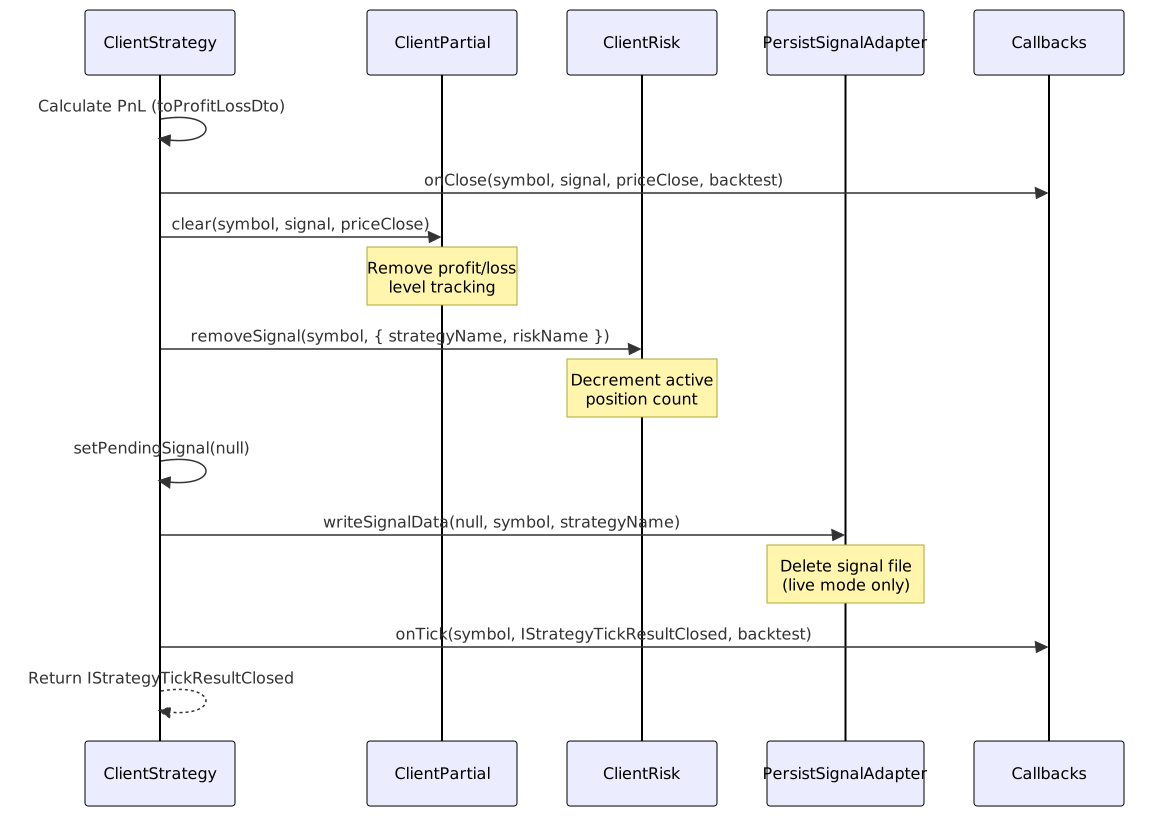
Closure Cleanup Sequence
When a signal closes, multiple cleanup operations execute:
Persistence Integration
ClientStrategy uses atomic file writes for crash-safe state persistence in live mode.
Persistence Adapters

Write Operations
| Method | Trigger | Persistence Call | Backtest Behavior |
|---|---|---|---|
setPendingSignal() |
Signal opened/closed | PersistSignalAdapter.writeSignalData() |
Calls onWrite callback only |
setScheduledSignal() |
Scheduled signal created/cancelled | PersistScheduleAdapter.writeScheduleData() |
Skipped |
File Paths (default implementation):
- Pending signal:
./persist/signal-{symbol}-{strategyName}.json - Scheduled signal:
./persist/schedule-{symbol}-{strategyName}.json
State Restoration Guarantees
Atomic Write: All persistence operations use atomic file writes (write-temp-rename pattern) to prevent corruption during crashes.
Validation on Load:
// waitForInit() validates restored signals
if (pendingSignal.exchangeName !== self.params.method.context.exchangeName) {
return; // Ignore mismatched exchange
}
if (pendingSignal.strategyName !== self.params.method.context.strategyName) {
return; // Ignore mismatched strategy
}
Callback Invocation: Restored signals trigger lifecycle callbacks:
onActivefor restored_pendingSignalonSchedulefor restored_scheduledSignal
Live Mode vs Backtest Mode Differences
ClientStrategy behavior diverges based on the execution.context.backtest flag.
| Feature | Live Mode (backtest=false) |
Backtest Mode (backtest=true) |
|---|---|---|
| Time Source | new Date() at each tick() |
when from ExecutionContextService |
| Candle Processing | VWAP from getAveragePrice() |
Array processing in backtest() |
| Persistence | All state changes persisted | No persistence (in-memory only) |
| State Restoration | waitForInit() loads from disk |
waitForInit() no-op |
| Scheduled Activation | Real-time price checks on each tick() |
Candle-by-candle in backtest() |
| Partial Callbacks | Called on each tick() |
Called on each candle iteration |
| Time Progression | 61-second sleep between ticks | Instant (skip-ahead optimization) |
Live Mode Tick Flow
// LiveLogicPrivateService
while (true) {
const result = await strategy.tick(symbol, strategyName);
if (result.action === "opened" || result.action === "closed") {
yield result; // Stream to listener
}
await sleep(TICK_TTL); // 61 seconds
}
Backtest Mode Flow
// BacktestLogicPrivateService
for (const when of timeframes) {
const result = await strategy.tick(symbol, strategyName);
if (result.action === "scheduled" || result.action === "opened") {
// Fetch future candles
const candles = await exchange.getNextCandles(symbol, "1m", signal.minuteEstimatedTime);
const finalResult = await strategy.backtest(symbol, strategyName, candles);
yield finalResult;
// Skip ahead to after signal closure
skipToTimestamp = finalResult.closeTimestamp;
}
}
Internal Helper Functions
ClientStrategy delegates complex logic to 19 stateless helper functions defined at module scope in src/client/ClientStrategy.ts:41-1486. This architecture improves testability and reduces cyclomatic complexity of public methods.
Helper Function Architecture
Method-to-Helper Mapping:

Function Reference Table
| Function | Line Range | Called By | Returns |
|---|---|---|---|
VALIDATE_SIGNAL_FN |
src/client/ClientStrategy.ts:45-330 | GET_SIGNAL_FN |
void (throws on error) |
GET_SIGNAL_FN |
src/client/ClientStrategy.ts:332-476 | tick() |
ISignalRow | IScheduledSignalRow | null |
GET_AVG_PRICE_FN |
src/client/ClientStrategy.ts:478-489 | backtest() |
number |
WAIT_FOR_INIT_FN |
src/client/ClientStrategy.ts:491-552 | waitForInit() |
Promise<void> |
CHECK_SCHEDULED_SIGNAL_TIMEOUT_FN |
src/client/ClientStrategy.ts:554-608 | tick() |
Promise<IStrategyTickResultCancelled | null> |
CHECK_SCHEDULED_SIGNAL_PRICE_ACTIVATION_FN |
src/client/ClientStrategy.ts:610-644 | tick() |
{ shouldActivate, shouldCancel } |
CANCEL_SCHEDULED_SIGNAL_BY_STOPLOSS_FN |
src/client/ClientStrategy.ts:646-679 | tick() |
Promise<IStrategyTickResultIdle> |
ACTIVATE_SCHEDULED_SIGNAL_FN |
src/client/ClientStrategy.ts:681-774 | tick() |
Promise<IStrategyTickResultOpened | null> |
RETURN_SCHEDULED_SIGNAL_ACTIVE_FN |
src/client/ClientStrategy.ts:776-801 | tick() |
Promise<IStrategyTickResultActive> |
OPEN_NEW_SCHEDULED_SIGNAL_FN |
src/client/ClientStrategy.ts:803-846 | tick() |
Promise<IStrategyTickResultScheduled> |
OPEN_NEW_PENDING_SIGNAL_FN |
src/client/ClientStrategy.ts:848-899 | tick() |
Promise<IStrategyTickResultOpened | null> |
CHECK_PENDING_SIGNAL_COMPLETION_FN |
src/client/ClientStrategy.ts:901-960 | tick() |
Promise<IStrategyTickResultClosed | null> |
CLOSE_PENDING_SIGNAL_FN |
src/client/ClientStrategy.ts:962-1023 | CHECK_PENDING_SIGNAL_COMPLETION_FN |
Promise<IStrategyTickResultClosed> |
RETURN_PENDING_SIGNAL_ACTIVE_FN |
src/client/ClientStrategy.ts:1025-1062 | tick() |
Promise<IStrategyTickResultActive> |
RETURN_IDLE_FN |
src/client/ClientStrategy.ts:1064-1077 | tick() |
Promise<IStrategyTickResultIdle> |
CANCEL_SCHEDULED_SIGNAL_IN_BACKTEST_FN |
src/client/ClientStrategy.ts:1079-1114 | PROCESS_SCHEDULED_SIGNAL_CANDLES_FN |
Promise<IStrategyTickResultCancelled> |
ACTIVATE_SCHEDULED_SIGNAL_IN_BACKTEST_FN |
src/client/ClientStrategy.ts:1116-1186 | PROCESS_SCHEDULED_SIGNAL_CANDLES_FN |
Promise<boolean> |
CLOSE_PENDING_SIGNAL_IN_BACKTEST_FN |
src/client/ClientStrategy.ts:1188-1261 | PROCESS_PENDING_SIGNAL_CANDLES_FN |
Promise<IStrategyTickResultClosed> |
PROCESS_SCHEDULED_SIGNAL_CANDLES_FN |
src/client/ClientStrategy.ts:1263-1357 | backtest() |
Promise<{ activated, cancelled, activationIndex, result }> |
PROCESS_PENDING_SIGNAL_CANDLES_FN |
src/client/ClientStrategy.ts:1359-1486 | backtest() |
Promise<IStrategyTickResultClosed | null> |
Function Naming Convention: All helper functions use SCREAMING_SNAKE_CASE_FN suffix for visual distinction and grep-ability.
Error Handling and Logging
ClientStrategy uses trycatch wrapper for signal generation errors with automatic fallback.
const GET_SIGNAL_FN = trycatch(
async (self: ClientStrategy): Promise<ISignalRow | IScheduledSignalRow | null> => {
// ... signal generation logic
},
{
defaultValue: null,
fallback: (error) => {
backtest.loggerService.warn("ClientStrategy exception thrown", {
error: errorData(error),
message: getErrorMessage(error),
});
errorEmitter.next(error);
},
}
);
Error Recovery Strategy:
- Signal generation errors: Return
null, log warning, emit toerrorEmitter - Validation errors: Caught by
trycatch, logged, returnnull - Persistence errors: Propagate to caller (fatal in live mode)
- Exchange errors: Propagate with retry logic in
ClientExchange
Logging Levels:
| Level | Use Case | Example |
|---|---|---|
debug |
State transitions | "ClientStrategy tick" |
info |
Signal lifecycle events | "ClientStrategy signal take_profit" |
warn |
Recoverable errors | "ClientStrategy exception thrown" |
Performance Considerations
Memory Efficiency
Memoization: StrategyConnectionService memoizes ClientStrategy instances per symbol-strategy pair:
// Only one instance per (symbol, strategyName) combination
const strategy = await strategyConnection.getStrategy(symbol, strategyName);
State Cleanup: Signals are automatically removed from memory after closure:
_pendingSignal = null_scheduledSignal = nullClientPartialstate clearedClientRiskactive position removed
Backtest Optimization
Skip-Ahead: After signal opens, backtest skips directly to closure without iterating unused timeframes:
// BacktestLogicPrivateService
if (result.action === "opened") {
const finalResult = await strategy.backtest(...);
skipToTimestamp = finalResult.closeTimestamp; // Skip ahead
}
VWAP Sliding Window: Only last N candles used for average price calculation (default 5), not full history.
Single File Load: waitForInit() uses singleshot pattern to prevent duplicate reads:
public waitForInit = singleshot(async () => await WAIT_FOR_INIT_FN(this));
Usage Examples
Basic Strategy Registration
import { addStrategy } from "backtest-kit";
await addStrategy({
strategyName: "momentum-scalper",
interval: "5m",
getSignal: async (symbol, when) => {
// Custom signal logic
const price = await getCurrentPrice(symbol);
const momentum = calculateMomentum(symbol, when);
if (momentum > threshold) {
return {
position: "long",
priceTakeProfit: price * 1.02,
priceStopLoss: price * 0.98,
minuteEstimatedTime: 120,
note: `Momentum: ${momentum.toFixed(2)}`
};
}
return null;
},
callbacks: {
onOpen: (symbol, signal, price, backtest) => {
console.log(`Signal opened: ${signal.id} at ${price}`);
},
onClose: (symbol, signal, price, backtest) => {
console.log(`Signal closed: ${signal.id} at ${price}`);
}
}
});
Scheduled Signal (Limit Order)
await addStrategy({
strategyName: "limit-order-strategy",
interval: "15m",
getSignal: async (symbol, when) => {
const currentPrice = await getCurrentPrice(symbol);
const supportLevel = findSupportLevel(symbol);
// Wait for price to drop to support before entering
if (currentPrice > supportLevel * 1.05) {
return {
position: "long",
priceOpen: supportLevel, // Will wait for this price
priceTakeProfit: supportLevel * 1.03,
priceStopLoss: supportLevel * 0.97,
minuteEstimatedTime: 240,
note: "Support bounce entry"
};
}
return null;
}
});
Live Trading with Crash Recovery
import { Live, listenSignalLive } from "backtest-kit";
// Listen for signal events
listenSignalLive((result) => {
if (result.action === "opened") {
console.log("Position opened:", result.signal.id);
} else if (result.action === "closed") {
console.log("Position closed:", result.pnl.pnlPercentage);
}
});
// Start live trading (will restore state if crashed)
for await (const result of Live.run("BTCUSDT", {
strategyName: "momentum-scalper",
exchangeName: "binance",
})) {
console.log(`Action: ${result.action}`);
}
Integration with Other Components

Component Interaction Pattern:
- Schema Registration:
addStrategy()→StrategySchemaService.addSchema() - Instance Creation:
StrategyConnectionService.getStrategy()→new ClientStrategy(params) - Context Injection:
StrategyGlobalServicewraps calls withExecutionContextServiceandMethodContextService - Execution: Logic services call
tick()orbacktest()through global service wrapper - Event Emission: Strategy emits to
signalEmitter/signalBacktestEmitter/signalLiveEmitter - Persistence: Automatic state writes to disk adapters in live mode