Persistence Layer
Purpose and Scope
The Persistence Layer provides crash-safe storage for signal state and risk management data in the backtest-kit framework. This layer implements atomic file writes to ensure no data loss during crashes, automatic recovery from corrupted files, and support for custom storage backends (Redis, MongoDB, PostgreSQL).
For signal lifecycle management, see Signal Lifecycle. For risk management data structures, see Risk Management. For logging infrastructure, see Logging System.
Architecture Overview
The persistence layer consists of three main components: the abstract PersistBase class, specialized adapters for signals and risk data, and the atomic file writing utility.

PersistBase Abstract Class
PersistBase is the foundation for all persistence implementations. It provides a file-based default implementation that can be overridden for custom backends.
Core Interface
The IPersistBase interface defines the contract all persistence implementations must fulfill:

Constructor and Directory Setup
The constructor accepts an entityName (e.g., "signal", "risk") and optional baseDir (default: ./logs/data). It computes the storage directory as baseDir/entityName:
| Parameter | Type | Default | Purpose |
|---|---|---|---|
entityName |
string |
required | Unique identifier for entity type |
baseDir |
string |
./logs/data |
Base directory for all persistence |
_directory |
string |
computed | Full path: baseDir/entityName |
CRUD Operations
Read Operations
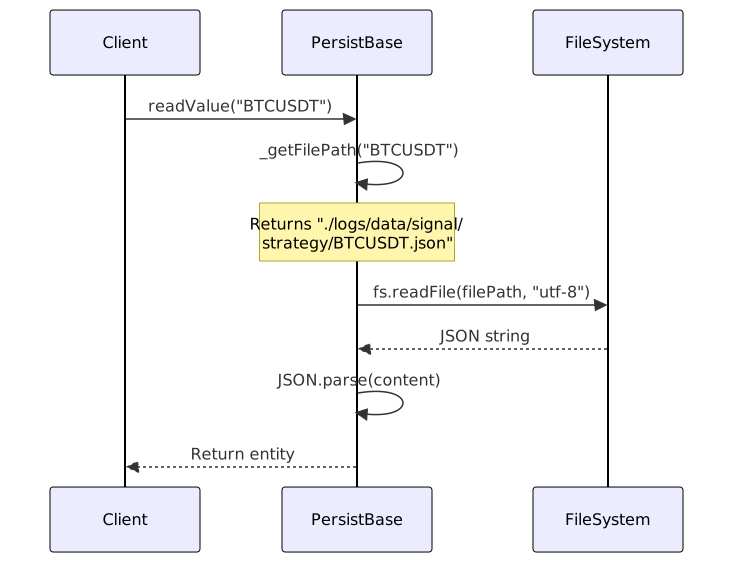
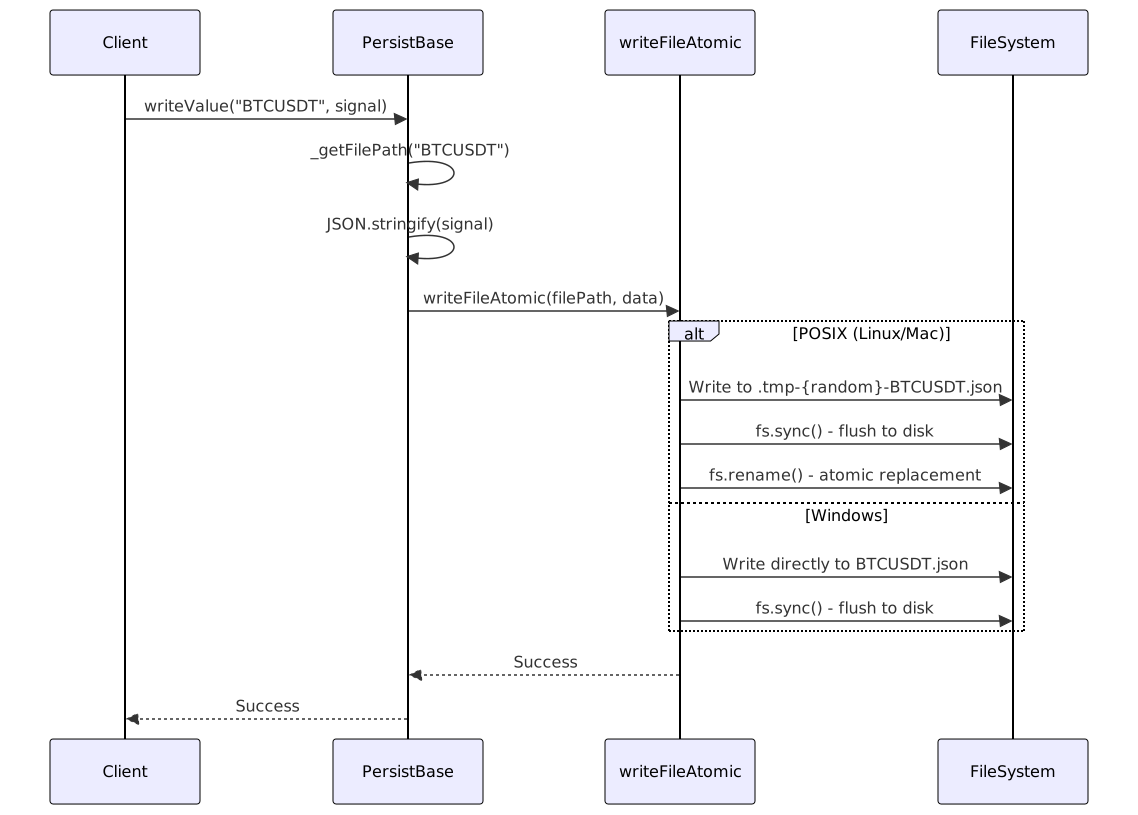
Write Operations
Write operations use writeFileAtomic to ensure crash safety (see Atomic File Writes):
Existence Check
The hasValue method checks if an entity exists without reading its contents:
| Method | Returns | Error Handling |
|---|---|---|
hasValue(entityId) |
true if exists |
Returns false on ENOENT |
false if not exists |
Throws on other errors |
Delete Operations
// Remove single entity
await persist.removeValue("BTCUSDT");
// Remove all entities for this type
await persist.removeAll();
Async Iteration Support
PersistBase implements AsyncIterableIterator for convenient iteration over all stored entities:

Entities are sorted alphanumerically by ID using localeCompare with numeric sensitivity.
Atomic File Writes
The writeFileAtomic function ensures that file writes either complete fully or leave the original file unchanged, preventing data corruption during crashes.
Platform-Specific Behavior

| Platform | Strategy | Atomicity | Temp File |
|---|---|---|---|
| POSIX | Temp file + rename | Full atomic replacement | .tmp-{random}-{filename} |
| Windows | Direct write + sync | Minimizes corruption risk | None |
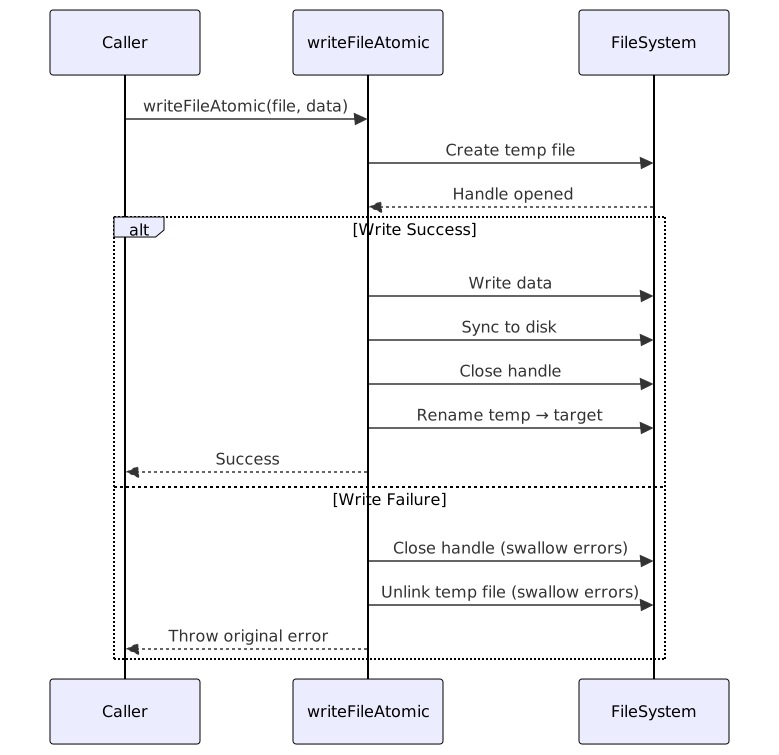
Error Handling and Cleanup
On POSIX systems, if any step fails, the temporary file is cleaned up before rethrowing the error:
Configuration Options
interface Options {
encoding?: BufferEncoding | undefined; // Default: "utf8"
mode?: number | undefined; // Default: 0o666
tmpPrefix?: string; // Default: ".tmp-"
}
Default File-Based Persistence
The default implementation stores entities as JSON files in a hierarchical directory structure.
Directory Structure
./logs/data/
├── signal/
│ ├── strategy-a/
│ │ ├── BTCUSDT.json
│ │ ├── ETHUSDT.json
│ │ └── SOLUSDT.json
│ └── strategy-b/
│ └── BTCUSDT.json
└── risk/
├── conservative/
│ └── positions.json
└── aggressive/
└── positions.json
| Entity Type | Entity Name | Entity ID | File Path |
|---|---|---|---|
signal |
strategy-a |
BTCUSDT |
./logs/data/signal/strategy-a/BTCUSDT.json |
risk |
conservative |
positions |
./logs/data/risk/conservative/positions.json |
JSON Serialization
All entities are serialized using JSON.stringify and deserialized using JSON.parse:
// Write: Entity → JSON string → File
const serializedData = JSON.stringify(entity);
await writeFileAtomic(filePath, serializedData, "utf-8");
// Read: File → JSON string → Entity
const fileContent = await fs.readFile(filePath, "utf-8");
return JSON.parse(fileContent) as T;
File Validation and Cleanup
During waitForInit, the system validates all existing files and removes corrupted ones. The cleanup uses retry logic with configurable parameters:
| Constant | Value | Purpose |
|---|---|---|
BASE_UNLINK_RETRY_COUNT |
5 | Number of retry attempts |
BASE_UNLINK_RETRY_DELAY |
1000ms | Delay between retries |
Persistence Adapters
The framework provides two specialized adapter classes for different data types: signals and risk positions.
PersistSignalAdapter
Manages signal state persistence for live trading. Each strategy-symbol combination gets its own file:

Entity Name Pattern: signal/{strategyName}
Entity ID Pattern: {symbol} (e.g., "BTCUSDT")
PersistRiskAdapter
Manages active position tracking for risk management. Each risk profile stores all positions in a single file:

Entity Name Pattern: risk/{riskName}
Entity ID Pattern: Always "positions"
Custom Adapter Registration
Custom adapters are registered before running any strategies:
import { PersistSignalAdaper, PersistRiskAdapter } from "backtest-kit";
// Register custom signal adapter
PersistSignalAdaper.usePersistSignalAdapter(RedisPersist);
// Register custom risk adapter
PersistRiskAdapter.usePersistRiskAdapter(MongoPersist);
// Now run strategies - they will use custom adapters
Live.background("BTCUSDT", { ... });
Crash Recovery and waitForInit
The waitForInit method implements crash recovery by validating existing data and cleaning up corrupted files.
Initialization Pattern
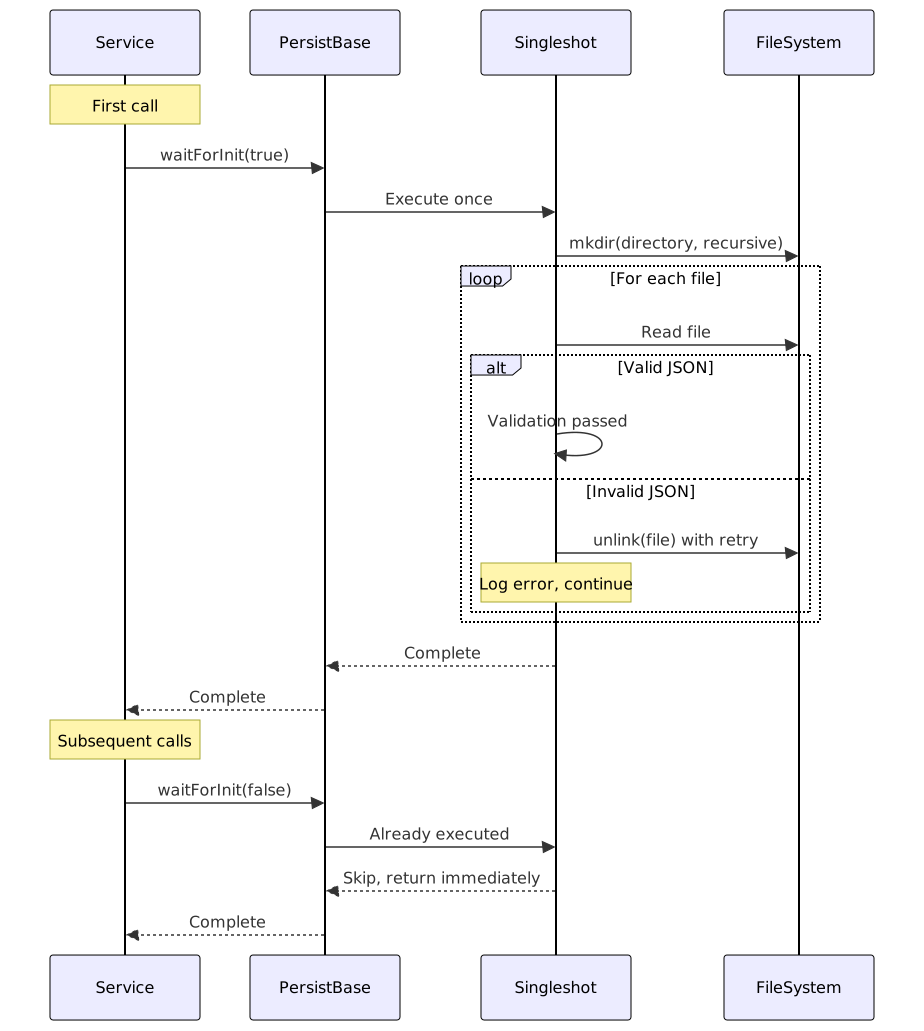
The singleshot decorator ensures initialization happens only once, even if called multiple times.
Validation Logic
Error messages logged:
- Invalid document:
"backtest-kit PersistBase found invalid document for filePath={path} entityName={name}" - Failed removal:
"backtest-kit PersistBase failed to remove invalid document for filePath={path} entityName={name}"
Custom Persistence Backends
Custom persistence implementations must implement the IPersistBase interface with four required methods.
Interface Requirements
interface IPersistBase<Entity extends IEntity = IEntity> {
// Initialize connection/storage
waitForInit(initial: boolean): Promise<void>;
// Read entity by ID
readValue(entityId: EntityId): Promise<Entity>;
// Check if entity exists
hasValue(entityId: EntityId): Promise<boolean>;
// Write entity atomically
writeValue(entityId: EntityId, entity: Entity): Promise<void>;
}
Redis Implementation Example

Key implementation details:
| Method | Redis Operation | Key Pattern |
|---|---|---|
readValue |
redis.get(key) |
{entityName}:{entityId} |
hasValue |
redis.exists(key) |
{entityName}:{entityId} |
writeValue |
redis.set(key, data) |
{entityName}:{entityId} |
removeValue |
redis.del(key) |
{entityName}:{entityId} |
removeAll |
redis.keys() + redis.del() |
{entityName}:* |
MongoDB Implementation Example
MongoDB implementation uses a collection per entity type with documents containing entityId and data fields:
// Collection schema
{
entityId: string, // e.g., "BTCUSDT"
data: Entity, // Serialized entity
updatedAt: Date // Last update timestamp
}
Key operations:
| Method | MongoDB Operation | Query Filter |
|---|---|---|
readValue |
collection.findOne() |
{ entityId } |
hasValue |
collection.countDocuments() |
{ entityId } |
writeValue |
collection.updateOne() (upsert) |
{ entityId } |
removeValue |
collection.deleteOne() |
{ entityId } |
removeAll |
collection.deleteMany() |
{} |
Adapter Selection Criteria

Usage Patterns
Direct Usage
Users can instantiate PersistBase directly for custom data storage:
import { PersistBase } from "backtest-kit";
// Create persistence for custom entity type
const tradingLogs = new PersistBase("trading-logs", "./logs/custom");
// Initialize
await tradingLogs.waitForInit(true);
// Write log entry
await tradingLogs.writeValue("log-1", {
timestamp: Date.now(),
message: "Strategy started",
metadata: { symbol: "BTCUSDT" }
});
// Read log entry
const log = await tradingLogs.readValue("log-1");
// Iterate over all logs
for await (const log of tradingLogs.values()) {
console.log("Log:", log);
}
// Filter logs (helper method)
for await (const log of tradingLogs.filter((l) =>
l.metadata.symbol === "BTCUSDT"
)) {
console.log("BTC Log:", log);
}
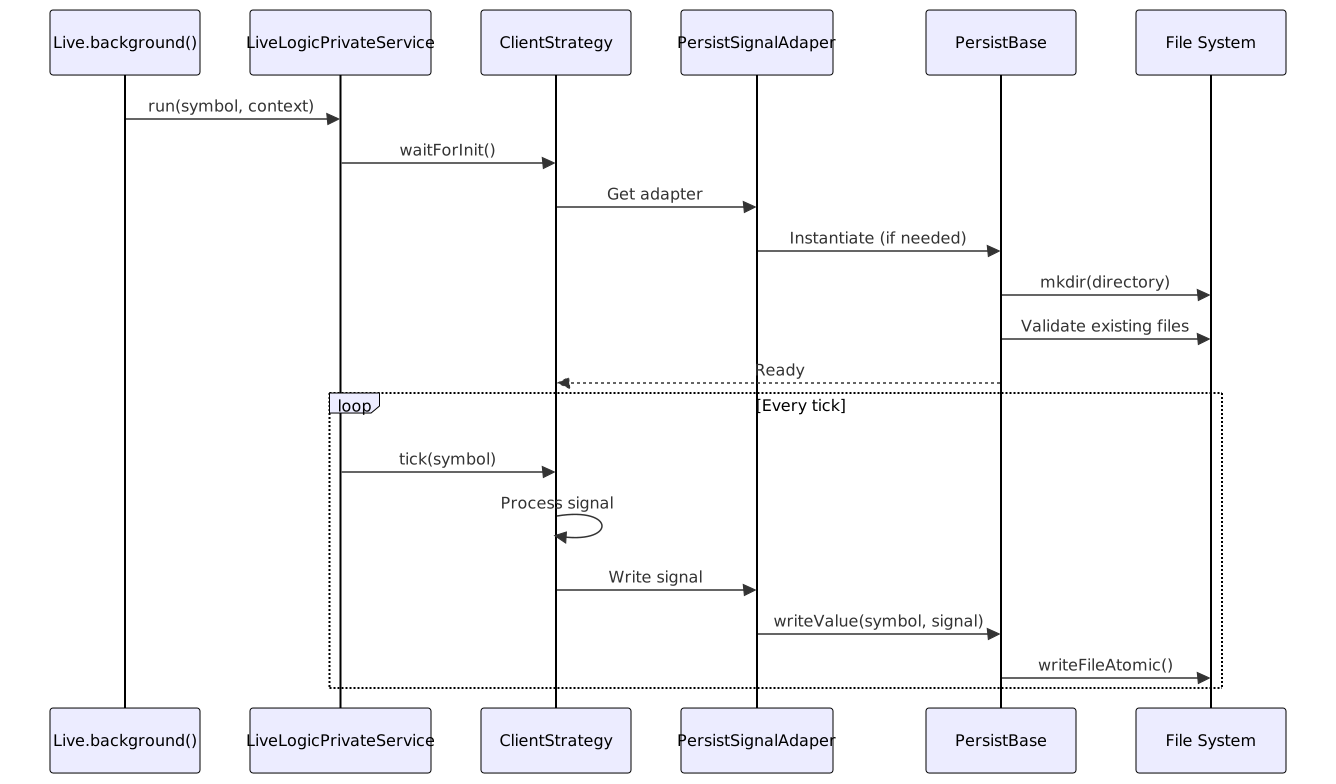
Service Layer Integration
Services use persistence adapters through the dependency injection system:
Testing with Mock Adapters
Tests use mock adapters to avoid file system operations:
// test/config/setup.mjs
PersistSignalAdaper.usePersistSignalAdapter(class {
async waitForInit() { /* no-op */ }
async readValue() {
throw new Error("Should not be called in tests");
}
async hasValue() { return false; }
async writeValue() { /* no-op */ }
});
This pattern ensures tests run fast and don't leave artifacts on disk.
Summary
The Persistence Layer provides:
- Crash-safe storage via atomic file writes with platform-specific optimizations
- Automatic recovery through file validation and cleanup during initialization
- Pluggable backends supporting Redis, MongoDB, PostgreSQL, or custom implementations
- Simple API with async iteration, filtering, and standard CRUD operations
- Zero data loss guarantees for signal state and risk positions in live trading
Key Classes:
PersistBase- Abstract base class with file-based default implementationIPersistBase- Interface for custom persistence backendswriteFileAtomic- Atomic file writing utilityPersistSignalAdaper- Adapter registry for signal persistencePersistRiskAdapter- Adapter registry for risk persistence