Live Execution Flow
This page documents the live trading execution flow implemented by LiveLogicPrivateService and LiveLogicPublicService. The focus is on the infinite while(true) loop mechanics, real-time Date() progression, TICK_TTL sleep intervals, and async generator result streaming.
Related pages: Crash Recovery (10.2) for persistence layer, Real-time Monitoring (10.3) for signal lifecycle callbacks, Backtest Execution Flow (9.1) for comparison with historical mode.
Overview
Live execution operates as an infinite async generator that monitors trading signals at 61-second intervals (TICK_TTL = 1 * 60 * 1_000 + 1). Unlike backtest mode which iterates through pre-defined timeframes, live mode progresses in real-time using new Date() at each tick.
Two-Layer Architecture:
| Layer | Class | Responsibility |
|---|---|---|
| Private | LiveLogicPrivateService |
Infinite loop, tick execution, result filtering |
| Public | LiveLogicPublicService |
Context injection via MethodContextService |
The generator yields only opened and closed results to consumers, filtering out idle, active, and scheduled states internally.
Service Layer Architecture
Live Execution Service Stack

Infinite Loop Mechanics
LiveLogicPrivateService.run() implements an infinite async generator with precise timing control:
Infinite Loop Implementation

Key Implementation Details:
| Line | Construct | Purpose |
|---|---|---|
| 12 | const TICK_TTL = 1 * 60 * 1_000 + 1 |
61-second interval (60s + 1ms margin) |
| 68 | while (true) |
Infinite loop - never completes |
| 70 | when = new Date() |
Real-time timestamp (not historical) |
| 74 | strategyGlobalService.tick(symbol, when, false) |
backtest=false flag enables live mode |
| 76-88 | try-catch with errorEmitter.next(error) |
Recoverable error handling - loop continues |
| 96-108 | performanceEmitter.next(...) |
Timing metrics for monitoring |
| 110-123 | if (action === 'active/idle/scheduled') |
Filter non-terminal states |
| 126 | yield result |
Stream opened/closed results to consumer |
| 86, 111, 116, 121, 128 | await sleep(TICK_TTL) |
Sleep between iterations |
Context Injection via MethodContextService
LiveLogicPublicService wraps the private service with MethodContextService.runAsyncIterator() to inject context:
Context Injection Flow
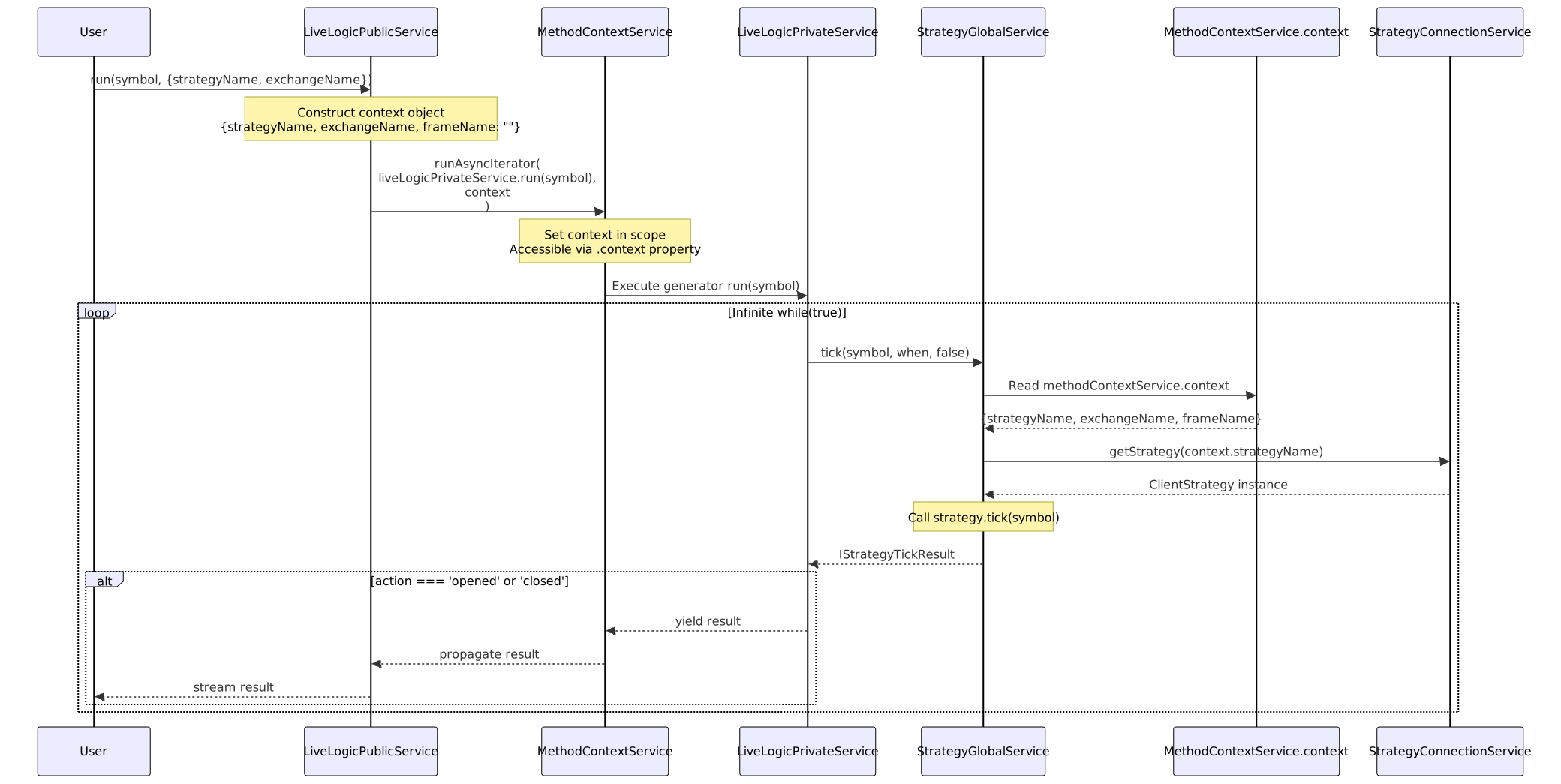
Context Schema:
interface IMethodContext {
strategyName: StrategyName; // Routes to registered strategy schema
exchangeName: ExchangeName; // Routes to registered exchange schema
frameName: FrameName; // Empty string for live mode (no frame iteration)
}
The MethodContextService uses AsyncLocalStorage to provide scoped context access throughout the call chain. Services read this.methodContextService.context to retrieve the current context without parameter passing.
Result Filtering and Streaming
LiveLogicPrivateService filters tick results before yielding to consumers:
Result Filtering State Machine

Filtering Logic:
| Action | Yielded? | Lines | Return Type | Reason |
|---|---|---|---|---|
idle |
No | 115-117 | - | No signal exists, nothing to report |
active |
No | 110-112 | - | Monitoring in progress, no state change |
scheduled |
No | 120-122 | - | Limit order pending activation |
opened |
Yes | 126 | IStrategyTickResultOpened |
New position opened |
closed |
Yes | 126 | IStrategyTickResultClosed |
Position closed with PNL |
The generator type signature enforces this filtering:
public async *run(symbol: string): AsyncGenerator<
IStrategyTickResultOpened | IStrategyTickResultClosed,
void,
unknown
>
TICK_TTL Sleep Interval
Live execution uses TICK_TTL to control polling frequency:
TICK_TTL Configuration:
const TICK_TTL = 1 * 60 * 1_000 + 1; // 60,001 milliseconds
| Component | Value | Reason |
|---|---|---|
| Base interval | 1 * 60 * 1_000 (60,000ms) |
1-minute candle alignment |
| Safety margin | + 1 (1ms) |
Prevents edge case timing issues |
| Total | 60,001ms |
61 seconds |
The 1ms margin ensures that operations complete before the next minute boundary, preventing race conditions when fetching candles that span minute transitions.
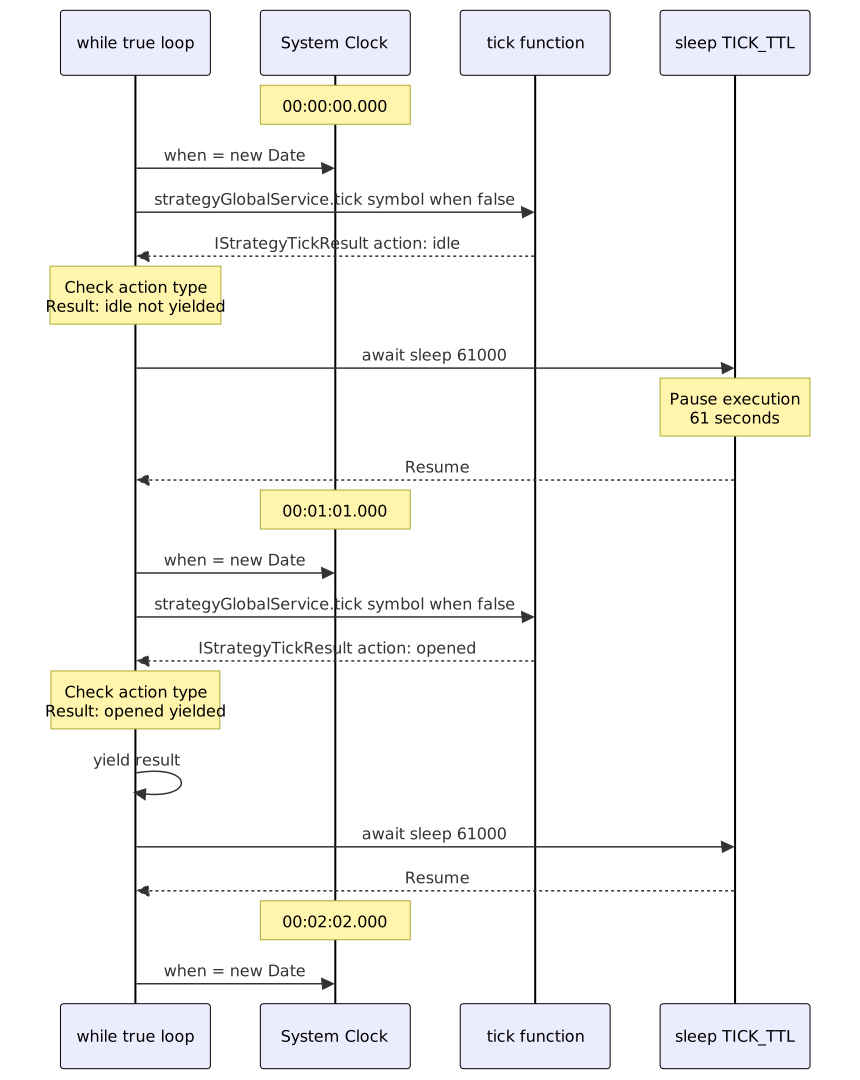
Sleep Locations:
// Line 86: After error recovery
await errorEmitter.next(error);
await sleep(TICK_TTL);
continue;
// Line 111: After active state check
if (result.action === "active") {
await sleep(TICK_TTL);
continue;
}
// Line 116: After idle state check
if (result.action === "idle") {
await sleep(TICK_TTL);
continue;
}
// Line 121: After scheduled state check
if (result.action === "scheduled") {
await sleep(TICK_TTL);
continue;
}
// Line 128: After yielding opened/closed result
yield result;
await sleep(TICK_TTL);
Timing Sequence:
Service Integration
LiveLogicPrivateService orchestrates multiple services during each tick:
Service Call Chain
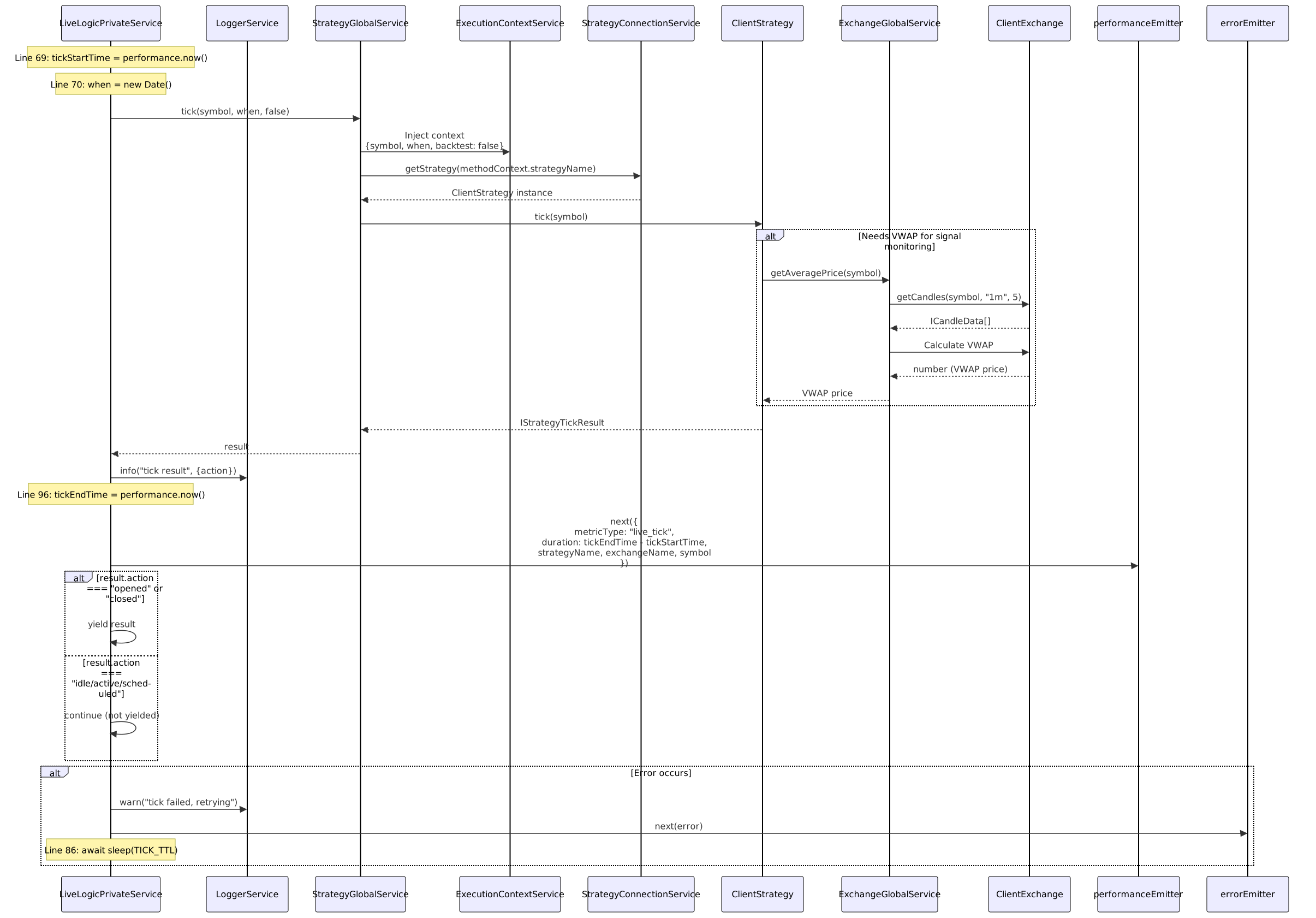
Key Service Dependencies:
| Service | Method | Purpose | Lines |
|---|---|---|---|
LoggerService |
log(), info(), warn() |
Logging execution events | 62-63, 90-93, 77-84 |
StrategyGlobalService |
tick(symbol, when, backtest) |
Execute strategy logic with context | 74 |
performanceEmitter |
next({...}) |
Emit timing metrics | 98-108 |
errorEmitter |
next(error) |
Emit recoverable errors | 85 |
backtest=false Parameter:
The backtest flag passed to tick() controls mode-specific behavior:
false: Live mode - uses persistence, real-time VWAP, enables crash recoverytrue: Backtest mode - fast-forward simulation, uses historical data
Crash Recovery Integration
LiveLogicPrivateService does not handle initialization directly. Instead, ClientStrategy.waitForInit() is called internally on the first tick() invocation:
Lazy Initialization Flow
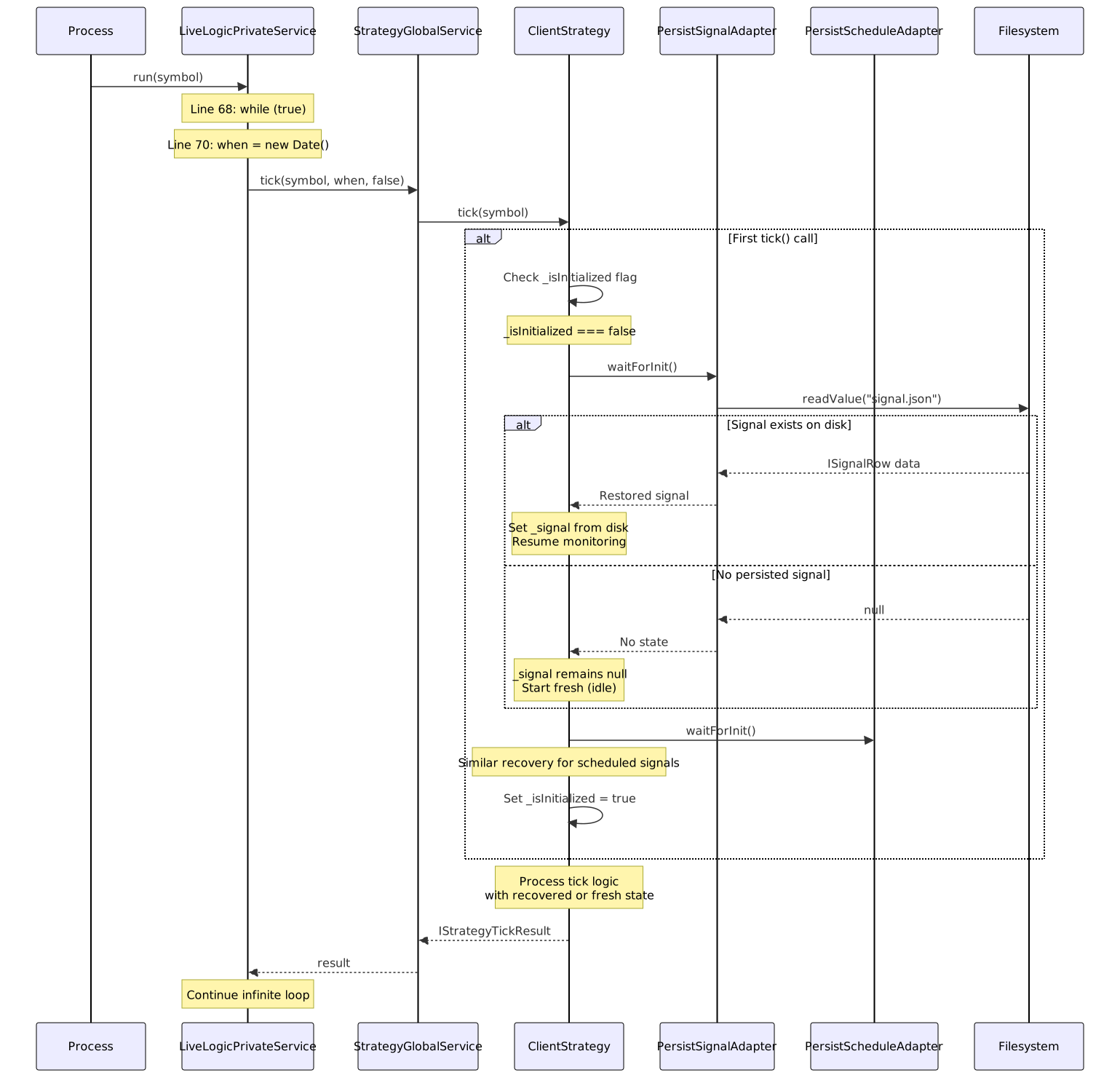
Initialization Characteristics:
| Aspect | Behavior |
|---|---|
| Timing | Lazy - on first tick() call, not during service construction |
| Location | Inside ClientStrategy, not in LiveLogicPrivateService |
| State Sources | PersistSignalAdapter and PersistScheduleAdapter |
| Crash Safety | Restored signals resume monitoring without re-opening |
| Idempotency | _isInitialized flag prevents multiple initialization attempts |
After initialization, subsequent ticks use the in-memory _signal and _scheduledSignal state, only persisting changes to disk atomically.
For detailed persistence mechanisms, see Crash Recovery (10.2).
Usage Example
The following example demonstrates live execution with result streaming:
import { Live } from "backtest-kit";
// Infinite generator - runs until process terminates
for await (const result of Live.run("BTCUSDT", {
strategyName: "my-strategy",
exchangeName: "binance",
})) {
if (result.action === "opened") {
console.log(`[OPENED] Signal ID: ${result.signal.id}`);
console.log(` Position: ${result.signal.position}`);
console.log(` Entry: ${result.signal.priceOpen}`);
console.log(` TP: ${result.signal.priceTakeProfit}`);
console.log(` SL: ${result.signal.priceStopLoss}`);
} else if (result.action === "closed") {
console.log(`[CLOSED] Signal ID: ${result.signal.id}`);
console.log(` Reason: ${result.closeReason}`);
console.log(` PNL: ${result.pnl.pnlPercentage.toFixed(2)}%`);
console.log(` Entry: ${result.pnl.priceOpen}`);
console.log(` Exit: ${result.pnl.priceClose}`);
}
// Loop continues indefinitely
// Use Ctrl+C or process.exit() to stop
}
Each iteration of the loop represents one 1-minute tick. Results stream immediately when signals open or close, enabling real-time event processing and logging.