Markdown Services
Purpose and Scope
Markdown Services comprise the reporting and analytics layer of the backtest-kit framework. These services listen to various event emitters, accumulate signal and performance data, calculate trading statistics, and generate formatted markdown reports persisted to disk. Each service specializes in a specific aspect of trading analysis: backtest results, live trading events, scheduled signals, partial profit/loss milestones, strategy comparisons, portfolio heatmaps, and performance profiling.
For information about the event system that feeds these services, see 3.4. For details about the execution modes that generate events, see 2.1.
Architecture Overview
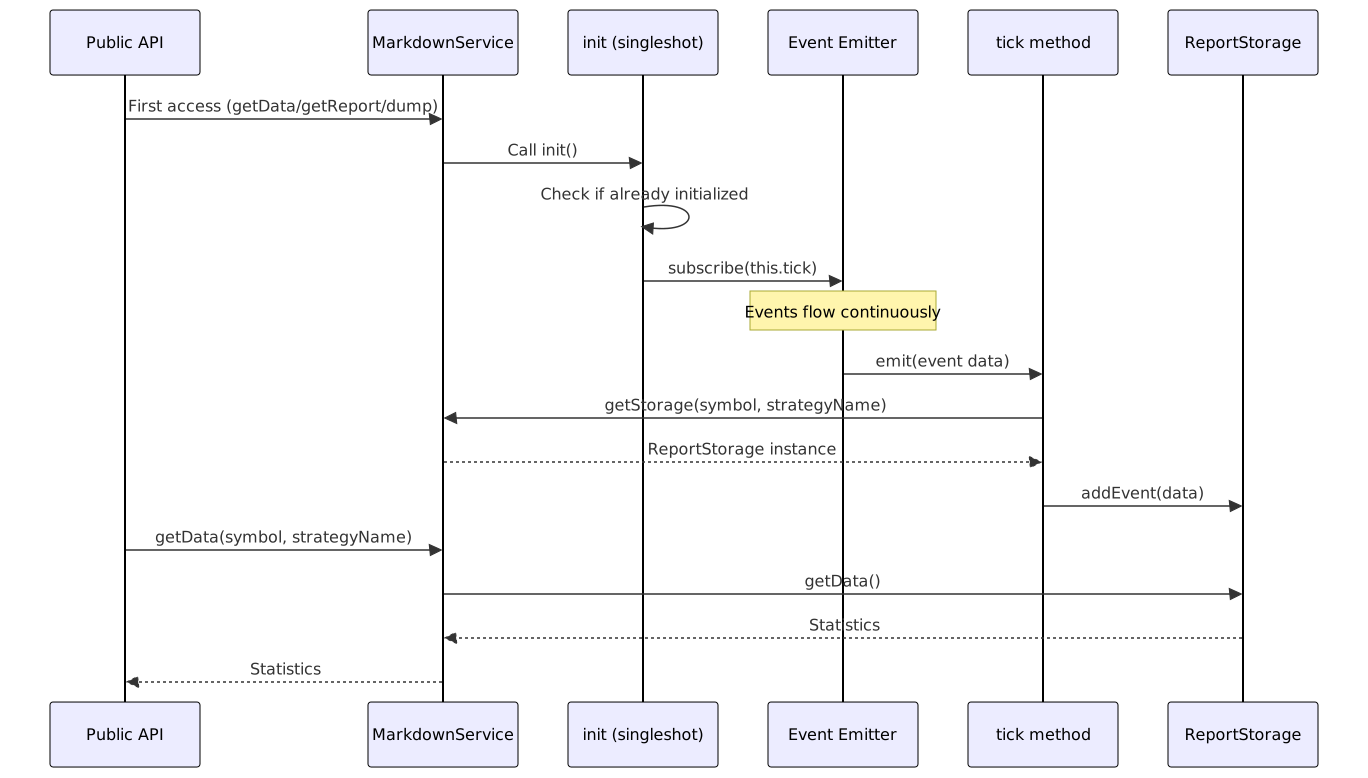
All Markdown Services follow a consistent architecture with three layers: Event Subscription, Storage Accumulation, and Report Generation. Each service subscribes to specific event emitters during initialization, maintains memoized storage instances per symbol-strategy pair, and provides methods to retrieve statistics or generate markdown reports.

Service Catalog
| Service | Event Source | Scope | Report Type | Statistics Interface |
|---|---|---|---|---|
BacktestMarkdownService |
signalBacktestEmitter |
Symbol-Strategy | Closed signals only | BacktestStatistics |
LiveMarkdownService |
signalLiveEmitter |
Symbol-Strategy | All events (idle/opened/active/closed) | LiveStatistics |
ScheduleMarkdownService |
signalEmitter |
Symbol-Strategy | Scheduled/opened/cancelled signals | ScheduleStatistics |
PartialMarkdownService |
partialProfitSubject, partialLossSubject |
Symbol-Strategy | Profit/loss milestones | PartialStatistics |
WalkerMarkdownService |
walkerEmitter |
Walker | Strategy comparison | WalkerStatistics |
HeatMarkdownService |
signalEmitter |
Strategy | Portfolio heatmap | IHeatmapStatistics |
PerformanceMarkdownService |
performanceEmitter |
Symbol-Strategy | Performance profiling | PerformanceStatistics |
Common Architecture Pattern
All Markdown Services implement a consistent internal structure with a memoized ReportStorage class that handles data accumulation and report generation. The service layer provides dependency injection integration and event subscription.

Memoized Storage Pattern
Each service uses memoize from functools-kit to create and cache ReportStorage instances. The key is typically ${symbol}:${strategyName} for symbol-strategy scoped services, or just ${walkerName} for walker services.
// Example from BacktestMarkdownService
private getStorage = memoize<(symbol: string, strategyName: string) => ReportStorage>(
([symbol, strategyName]) => `${symbol}:${strategyName}`,
() => new ReportStorage()
);
This ensures that each unique symbol-strategy pair maintains isolated state, preventing cross-contamination of statistics.
Singleshot Initialization
Services use singleshot from functools-kit to ensure event subscription occurs exactly once. This initialization happens lazily on first use.
protected init = singleshot(async () => {
this.loggerService.log("backtestMarkdownService init");
signalBacktestEmitter.subscribe(this.tick);
});
BacktestMarkdownService
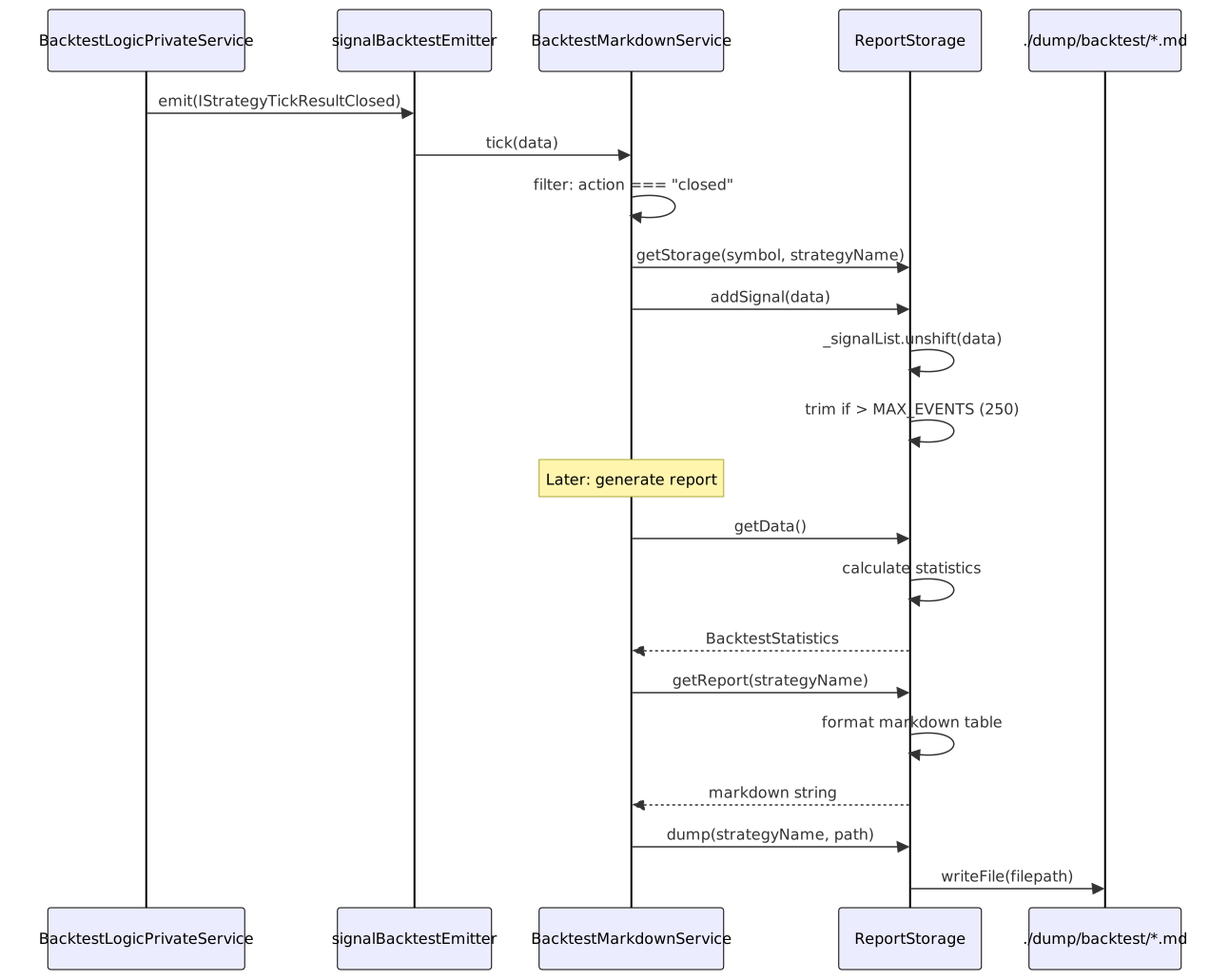
Accumulates closed signals from backtest executions and generates comprehensive performance reports. Only processes signals with action === "closed", ignoring opened/active/idle states.
Key Features
- Subscribes to
signalBacktestEmitter - Stores up to
MAX_EVENTS(250) closed signals per symbol-strategy pair - Calculates 9 performance metrics: win rate, average PNL, total PNL, standard deviation, Sharpe ratio, annualized Sharpe ratio, certainty ratio, and expected yearly returns
- Generates markdown tables with 12 columns including signal ID, symbol, position, prices, PNL, close reason, duration, and timestamps
Statistics Interface
interface BacktestStatistics {
signalList: IStrategyTickResultClosed[];
totalSignals: number;
winCount: number;
lossCount: number;
winRate: number | null; // 0-100%, null if unsafe
avgPnl: number | null; // percentage
totalPnl: number | null; // cumulative percentage
stdDev: number | null; // volatility
sharpeRatio: number | null; // avgPnl / stdDev
annualizedSharpeRatio: number | null; // sharpeRatio × √365
certaintyRatio: number | null; // avgWin / |avgLoss|
expectedYearlyReturns: number | null; // avgPnl × tradesPerYear
}
Data Flow
LiveMarkdownService
Tracks all tick events from live trading including idle, opened, active, and closed states. Provides real-time monitoring of strategy execution with automatic idle event deduplication.
Key Features
- Subscribes to
signalLiveEmitter - Stores up to
MAX_EVENTS(250) events per symbol-strategy pair - Replaces idle events intelligently: only replaces the last idle if no opened/active signals occurred after it
- Replaces active events with the same
signalIdto avoid duplicate active rows - Calculates same 9 performance metrics as BacktestMarkdownService
- 14-column markdown table includes percentage to TP/SL for active signals
Idle Event Replacement Logic
The service implements smart idle event deduplication to prevent idle event spam while preserving important state transitions:

Active Event Replacement
Active events for the same signal are replaced rather than accumulated, ensuring only the latest active state is stored:
// Find the last active event with the same signalId
const lastActiveIndex = this._eventList.findLastIndex(
(event) => event.action === "active" && event.signalId === data.signal.id
);
// Replace the last active event with the same signalId
if (lastActiveIndex !== -1) {
this._eventList[lastActiveIndex] = newEvent;
return;
}
ScheduleMarkdownService
Monitors scheduled signals (limit orders) through their lifecycle: scheduled → opened or cancelled. Tracks activation times and cancellation rates.
Key Features
- Subscribes to
signalEmitter(global, not live-specific) - Filters for
scheduled,opened, andcancelledactions - For opened events, only tracks if
scheduledAt !== pendingAt(was previously scheduled) - Calculates activation rate, cancellation rate, average wait times
Statistics Interface
interface ScheduleStatistics {
eventList: ScheduledEvent[];
totalEvents: number;
totalScheduled: number;
totalOpened: number;
totalCancelled: number;
cancellationRate: number | null; // (cancelled / scheduled) × 100
activationRate: number | null; // (opened / scheduled) × 100
avgWaitTime: number | null; // minutes for cancelled signals
avgActivationTime: number | null; // minutes for opened signals
}
Event Processing Logic

PartialMarkdownService
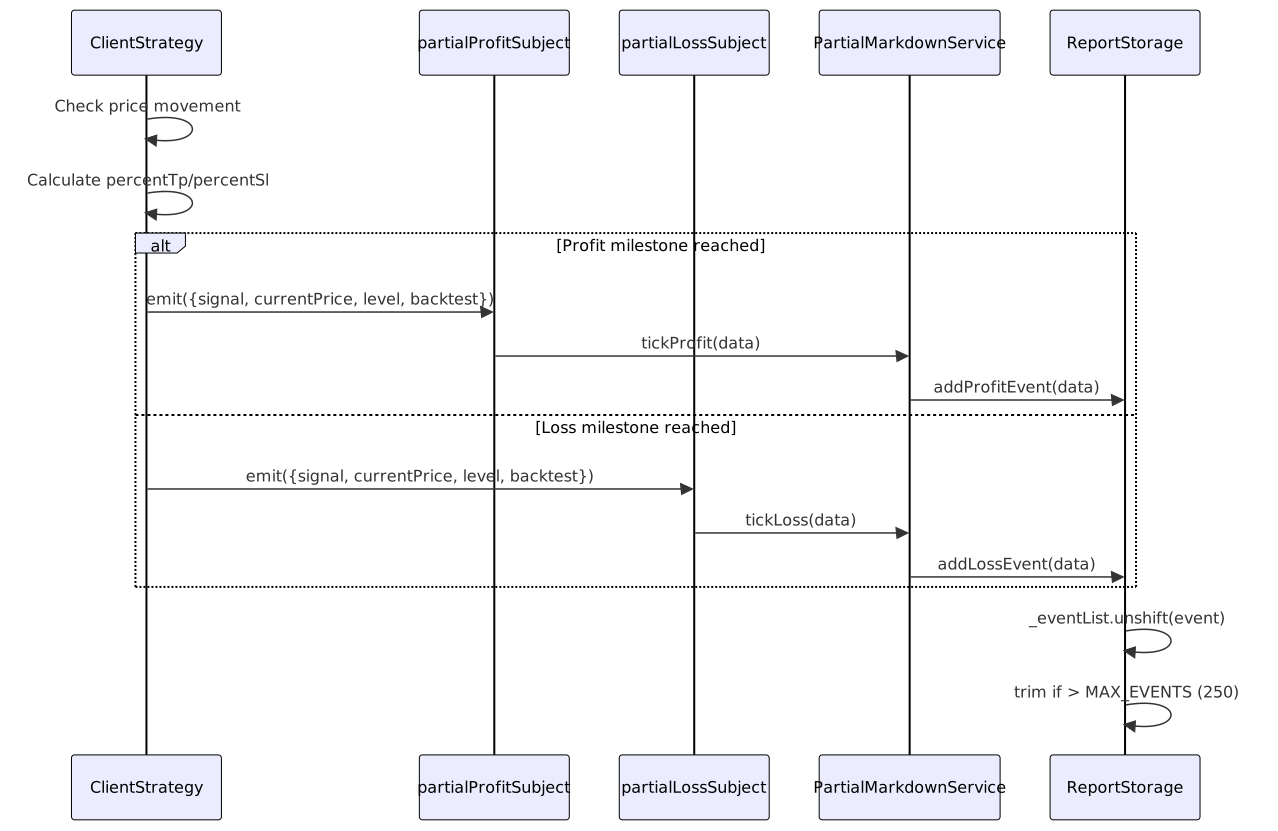
Tracks partial profit and loss milestones (10%, 20%, 30%, etc.) as signals progress toward TP or SL. Provides insight into price action before final close.
Key Features
- Subscribes to
partialProfitSubjectandpartialLossSubject - Records timestamp, symbol, strategy, signal ID, position, current price, level, and mode (backtest/live)
- Separate counters for profit vs loss events
- 9-column table with action, symbol, strategy, signal ID, position, level, current price, timestamp, mode
Statistics Interface
interface PartialStatistics {
eventList: PartialEvent[];
totalEvents: number;
totalProfit: number; // count of profit milestone events
totalLoss: number; // count of loss milestone events
}
Event Flow
WalkerMarkdownService
Aggregates results from walker strategy comparisons. Ranks strategies by optimization metric and generates comparison tables with PNL details for all closed signals across all strategies.
Key Features
- Subscribes to
walkerEmitter - One
ReportStorageinstance per walker name (not per symbol-strategy) - Stores metadata:
totalStrategies,bestStats,bestMetric,bestStrategy - Accumulates all strategy results for comparison table
- Generates two tables: Top N strategies comparison + All signals PNL table
Statistics Interface
interface WalkerStatistics extends IWalkerResults {
strategyResults: IStrategyResult[]; // Array of all strategy results
}
interface IStrategyResult {
strategyName: StrategyName;
stats: BacktestStatistics;
metricValue: number | null; // Value of optimization metric
}
Comparison Table Generation
The service dynamically creates column configuration based on the optimization metric:

HeatMarkdownService
Provides portfolio-level analytics by aggregating signals across all symbols for a strategy. Calculates per-symbol statistics and portfolio-wide metrics.
Key Features
- Subscribes to
signalEmitter(global) - Memoizes storage by
strategyNameonly (not symbol) - Maintains
Map<string, IStrategyTickResultClosed[]>for symbol-level storage - Calculates 13 metrics per symbol: Total PNL, Sharpe Ratio, Max Drawdown, Profit Factor, Expectancy, Win Rate, Avg Win/Loss, Max Win/Loss Streak, Total Trades
- Sorts symbols by Sharpe Ratio (best performers first)
- Calculates portfolio-wide aggregates
Statistics Interface
interface IHeatmapStatistics {
symbols: IHeatmapRow[]; // Per-symbol stats
totalSymbols: number;
portfolioTotalPnl: number | null;
portfolioSharpeRatio: number | null; // Weighted by trade count
portfolioTotalTrades: number;
}
interface IHeatmapRow {
symbol: string;
totalPnl: number | null;
sharpeRatio: number | null;
maxDrawdown: number | null;
profitFactor: number | null; // sumWins / |sumLosses|
expectancy: number | null; // winRate × avgWin + lossRate × avgLoss
winRate: number | null;
avgWin: number | null;
avgLoss: number | null;
maxWinStreak: number;
maxLossStreak: number;
totalTrades: number;
// ... additional fields
}
Portfolio Metrics Calculation

PerformanceMarkdownService
Profiles execution performance by tracking metric durations, percentiles, and wait times. Identifies bottlenecks in strategy execution.
Key Features
- Subscribes to
performanceEmitter - Groups events by
metricType(e.g., "getSignal", "getCandles", "checkSignal") - Stores up to
MAX_EVENTS(10,000) per symbol-strategy pair - Calculates 13 statistics per metric type: count, total/avg/min/max duration, std dev, median, P95, P99, avg/min/max wait time
- Sorts metrics by total duration (descending) to show bottlenecks first
- Displays time distribution as percentages
Statistics Interface
interface PerformanceStatistics {
strategyName: string;
totalEvents: number;
totalDuration: number; // milliseconds
metricStats: Record<string, MetricStats>;
events: PerformanceContract[];
}
interface MetricStats {
metricType: PerformanceMetricType;
count: number;
totalDuration: number;
avgDuration: number;
minDuration: number;
maxDuration: number;
stdDev: number;
median: number;
p95: number; // 95th percentile
p99: number; // 99th percentile
avgWaitTime: number; // interval between consecutive events
minWaitTime: number;
maxWaitTime: number;
}
Percentile Calculation
The service calculates percentiles to identify outliers and tail latencies:
function percentile(sortedArray: number[], p: number): number {
if (sortedArray.length === 0) return 0;
const index = Math.ceil((sortedArray.length * p) / 100) - 1;
return sortedArray[Math.max(0, index)];
}
// Usage
median: percentile(durations, 50),
p95: percentile(durations, 95),
p99: percentile(durations, 99),
Column Configuration Pattern
All services use a Column[] array to define table structure. Each column specifies how to extract and format data from event objects.
Column Interface
interface Column {
key: string; // Unique identifier
label: string; // Table header
format: (data: EventType) => string; // Data formatter
isVisible: () => boolean; // Conditional rendering
}
Example from BacktestMarkdownService
const columns: Column[] = [
{
key: "signalId",
label: "Signal ID",
format: (data) => data.signal.id,
isVisible: () => true,
},
{
key: "note",
label: "Note",
format: (data) => toPlainString(data.signal.note ?? "N/A"),
isVisible: () => GLOBAL_CONFIG.CC_REPORT_SHOW_SIGNAL_NOTE,
},
{
key: "pnl",
label: "PNL (net)",
format: (data) => {
const pnlPercentage = data.pnl.pnlPercentage;
return `${pnlPercentage > 0 ? "+" : ""}${pnlPercentage.toFixed(2)}%`;
},
isVisible: () => true,
},
// ... more columns
];
Table Generation Process

The generated markdown follows this format:
| Signal ID | Symbol | Position | PNL (net) | Close Reason | Duration (min) |
| --- | --- | --- | --- | --- | --- |
| abc123 | BTCUSDT | LONG | +2.45% | take_profit | 45 |
| def456 | ETHUSDT | SHORT | -1.20% | stop_loss | 30 |
Safe Math and Null Handling
All services implement isUnsafe() function to detect NaN, Infinity, or null values. Unsafe values are replaced with null in statistics interfaces, ensuring reports display "N/A" instead of corrupted numbers.
function isUnsafe(value: number | null): boolean {
if (typeof value !== "number") {
return true;
}
if (isNaN(value)) {
return true;
}
if (!isFinite(value)) {
return true;
}
return false;
}
// Usage
if (isUnsafe(winRate)) winRate = null;
if (isUnsafe(sharpeRatio)) sharpeRatio = null;
This prevents division by zero, empty array reductions, and other edge cases from producing invalid statistics.
Public API Methods
All services expose four public methods for programmatic access:
| Method | Parameters | Returns | Purpose |
|---|---|---|---|
getData() |
symbol, strategyName |
Promise<Statistics> |
Retrieve calculated statistics |
getReport() |
symbol, strategyName |
Promise<string> |
Generate markdown report |
dump() |
symbol, strategyName, path? |
Promise<void> |
Save report to disk |
clear() |
ctx? |
Promise<void> |
Clear accumulated data |
Example Usage
// Get statistics programmatically
const stats = await Backtest.getData("BTCUSDT", "my-strategy");
console.log(`Win Rate: ${stats.winRate}%`);
console.log(`Sharpe Ratio: ${stats.sharpeRatio}`);
// Generate markdown string
const markdown = await Backtest.getReport("BTCUSDT", "my-strategy");
console.log(markdown);
// Save to disk
await Backtest.dump("BTCUSDT", "my-strategy", "./custom/path");
// Clear data
await Backtest.clear({ symbol: "BTCUSDT", strategyName: "my-strategy" });
File Output Structure
Reports are written to ./dump/ directory with subdirectories per service type:
./dump/
├── backtest/
│ ├── strategy-a.md
│ └── strategy-b.md
├── live/
│ ├── strategy-a.md
│ └── strategy-b.md
├── schedule/
│ ├── strategy-a.md
│ └── strategy-b.md
├── partial/
│ ├── BTCUSDT_strategy-a.md
│ └── ETHUSDT_strategy-a.md
├── walker/
│ ├── walker-comparison-1.md
│ └── walker-comparison-2.md
├── heatmap/
│ ├── strategy-a.md
│ └── strategy-b.md
└── performance/
├── BTCUSDT_strategy-a.md
└── ETHUSDT_strategy-a.md
Naming conventions:
- Backtest/Live/Schedule/Heatmap:
{strategyName}.md - Partial/Performance:
{symbol}_{strategyName}.md - Walker:
{walkerName}.md
Integration with Event System
Markdown Services are automatically initialized and subscribed to their respective emitters. The initialization occurs lazily via singleshot wrapper, ensuring subscriptions happen only once regardless of how many times the service is accessed.