Context Propagation
Purpose and Scope
This document explains the context propagation system in backtest-kit, which uses ExecutionContextService and MethodContextService to pass runtime parameters and schema identifiers implicitly through the call stack without manual parameter threading. This pattern enables temporal isolation for look-ahead bias prevention and proper instance isolation across different execution contexts.
For information about how these context services integrate with the dependency injection system, see Dependency Injection System. For details on how temporal isolation prevents look-ahead bias, see Temporal Isolation and Look-Ahead Prevention.
The Problem: Parameter Threading
Without context propagation, every function in the execution path would need explicit parameters for runtime context (symbol, timestamp, backtest flag) and schema identifiers (strategyName, exchangeName, frameName). This creates maintenance burden and tight coupling.

Context Services Overview
The system uses two scoped context services to eliminate parameter threading:
| Context Service | Scope | Contains | Used By | Purpose |
|---|---|---|---|---|
ExecutionContextService |
Runtime execution | symbol, when, backtest |
Core services, Client implementations | Temporal isolation, preventing access to future data |
MethodContextService |
Schema routing | strategyName, exchangeName, frameName |
Connection services, Global services | Instance selection, memoization keys |

ExecutionContextService
ExecutionContextService provides runtime execution parameters that change for every tick/candle during strategy execution. It uses di-scoped library's IScopedClassRun interface to wrap execution in AsyncLocalStorage context.
Context Structure
interface IExecutionContext {
symbol: string; // Trading pair (e.g., "BTCUSDT")
when: Date; // Current timestamp for operation
backtest: boolean; // true = backtest mode, false = live mode
}
Key Properties
| Property | Type | Purpose | Example |
|---|---|---|---|
symbol |
string |
Trading pair identifier | "BTCUSDT", "ETHUSDT" |
when |
Date |
Current execution timestamp | new Date("2024-01-15T10:30:00Z") |
backtest |
boolean |
Execution mode flag | true (backtest), false (live) |
Temporal Isolation
The when property is critical for preventing look-ahead bias during backtesting. When ClientExchange.getCandles() is called, it uses when to fetch only historical data up to that timestamp, never future data.

MethodContextService
MethodContextService provides schema identifiers that determine which registered component instances to use. It enables proper memoization and instance isolation across different strategies, exchanges, and frames.
Context Structure
interface IMethodContext {
exchangeName: ExchangeName; // Exchange schema identifier
strategyName: StrategyName; // Strategy schema identifier
frameName: FrameName; // Frame schema identifier (empty for live)
}
Instance Isolation
Connection services use MethodContextService.context to build composite memoization keys, ensuring separate instances for different execution contexts.

Implementation Using di-scoped
Both context services extend the IScopedClassRun interface from the di-scoped library, which provides AsyncLocalStorage-based context propagation.
Service Declaration Pattern
The context services are declared with a complex type signature that combines:
- Constructor signature
- Omitted prototype
IScopedClassRuninterface with context parameter
declare const ExecutionContextService:
(new () => { readonly context: IExecutionContext })
& Omit<{
new (context: IExecutionContext): {
readonly context: IExecutionContext;
};
}, "prototype">
& di_scoped.IScopedClassRun<[context: IExecutionContext]>;
Execution Methods
The IScopedClassRun interface provides two key methods for wrapping execution:
| Method | Purpose | Use Case | Returns |
|---|---|---|---|
runInContext() |
Wrap async function execution | Single operations, API calls | Promise<T> |
runAsyncIterator() |
Wrap async generator execution | Backtest iteration, streaming | AsyncIterator<T> |
Usage Patterns
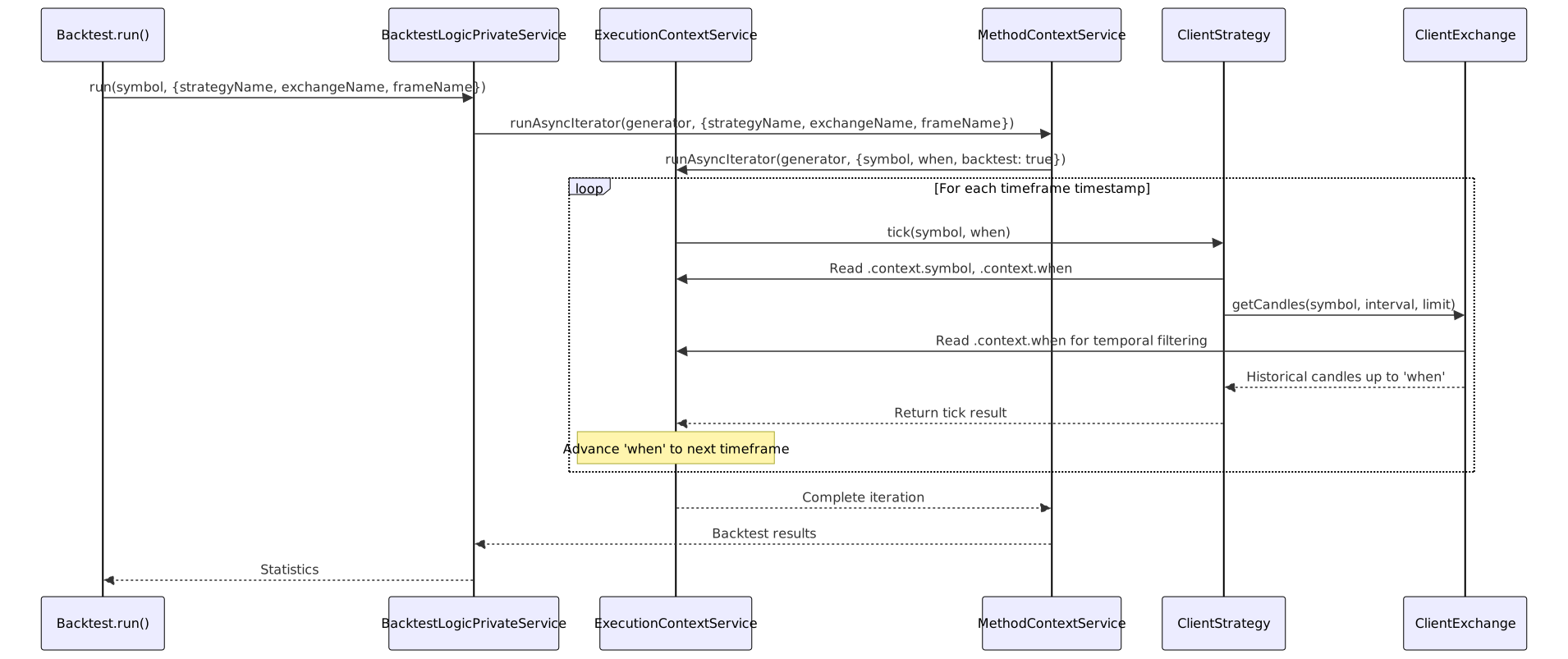
Pattern 1: Backtest Execution Context
Backtest execution wraps the entire backtest iteration in both ExecutionContextService and MethodContextService contexts. The when parameter advances through timeframes, and backtest is always true.
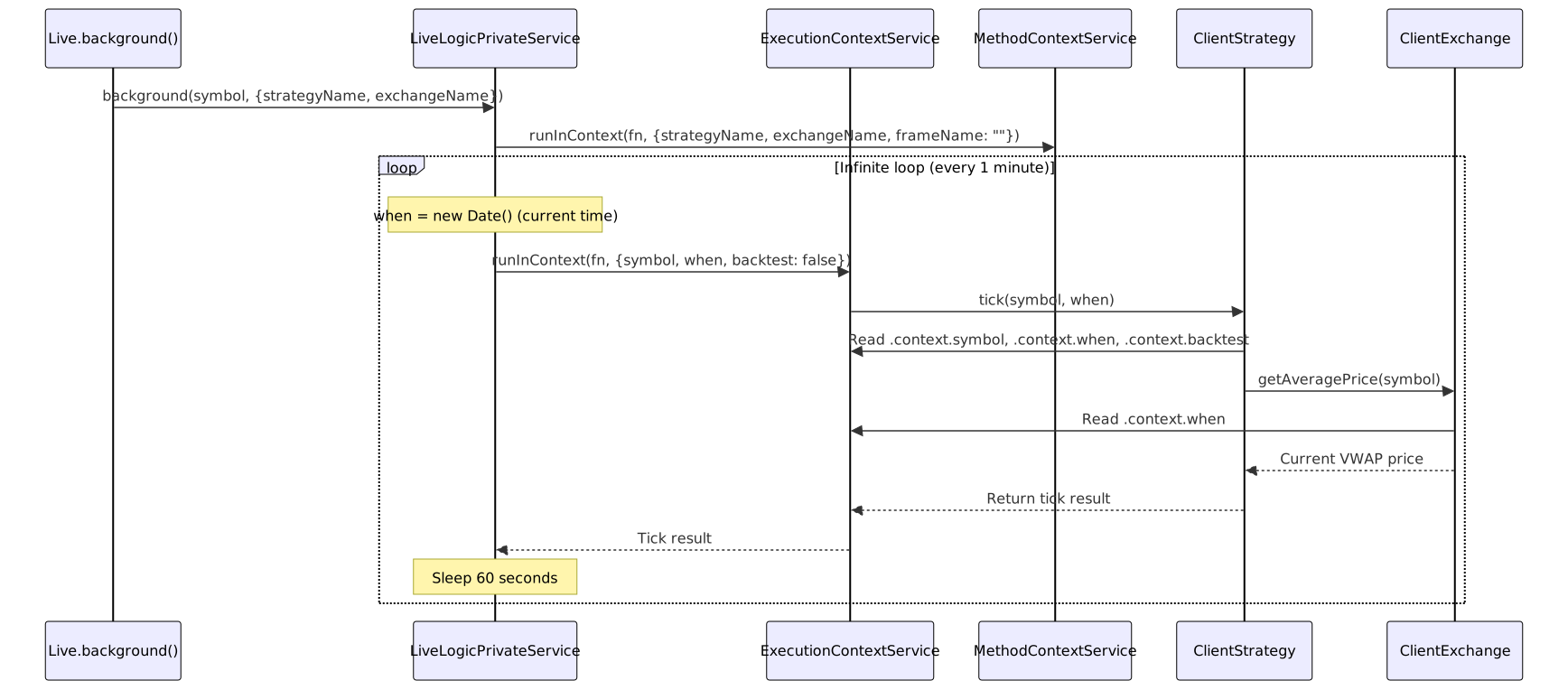
Pattern 2: Live Execution Context
Live execution wraps each tick in execution context with when set to Date.now() and backtest set to false. The method context remains constant throughout the live session.
Pattern 3: Connection Service Instance Selection
Connection services use MethodContextService.context to retrieve the correct schema and build composite memoization keys for client instances.

Context Flow Through System Layers
The following diagram shows how execution and method contexts flow through the service layer architecture, from public API down to client implementations.

Benefits and Trade-offs
Benefits
| Benefit | Description | Impact |
|---|---|---|
| No Parameter Threading | Eliminates need to pass context parameters through every function | Reduces boilerplate by ~80% |
| Loose Coupling | Functions don't need to know about context structure | Easier to refactor and extend |
| Temporal Isolation | ExecutionContextService.context.when prevents look-ahead bias |
Ensures realistic backtest results |
| Instance Isolation | MethodContextService.context enables proper memoization |
Prevents state leakage between executions |
| Type Safety | TypeScript discriminated unions for context access | Compile-time error detection |
Implementation Details

Dependency Injection Integration
Context services are registered in the DI container and injected into client implementations via constructor parameters.
DI Registration
The context services are provided as singletons in the DI container at application startup.
// src/lib/core/types.ts
const contextServices = {
executionContextService: Symbol('executionContextService'),
methodContextService: Symbol('methodContextService'),
};
// src/lib/core/provide.ts
{
provide(TYPES.executionContextService, () => new ExecutionContextService());
provide(TYPES.methodContextService, () => new MethodContextService());
}
Client Injection
Client implementations receive context services through their constructor parameters, defined in their *Params interfaces.
// types.d.ts - IExchangeParams extends IExchangeSchema
interface IExchangeParams extends IExchangeSchema {
logger: ILogger;
execution: TExecutionContextService; // Injected context service
}

Summary
Context propagation in backtest-kit eliminates parameter threading by using two scoped services:
- ExecutionContextService - Provides runtime parameters (
symbol,when,backtest) for temporal isolation and look-ahead bias prevention - MethodContextService - Provides schema identifiers (
strategyName,exchangeName,frameName) for instance selection and memoization
Both services use di-scoped library's AsyncLocalStorage-based context propagation to make context implicitly available throughout the call stack without explicit parameter passing. This pattern reduces boilerplate, improves maintainability, and ensures proper isolation between different execution contexts.